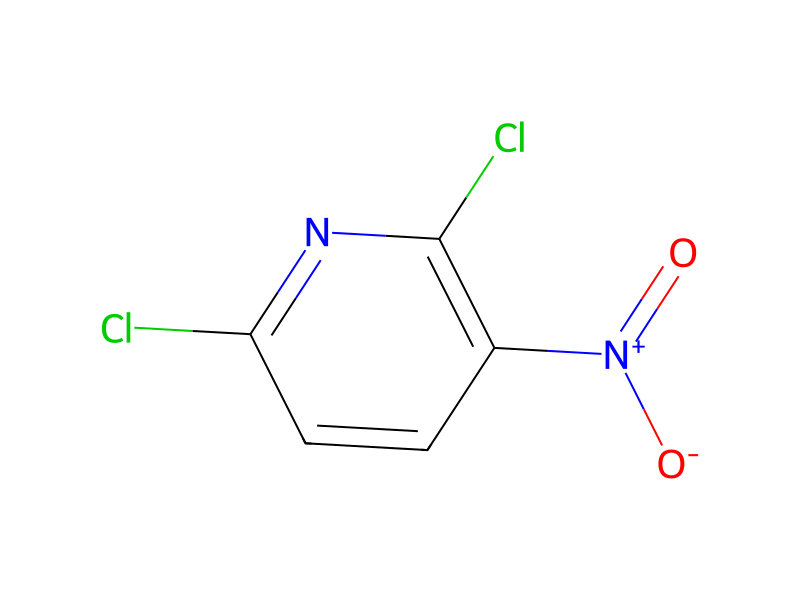
[CH:1]1([C:4]2[CH:5]=[C:6]([NH2:9])[NH:7][N:8]=2)[CH2:3][CH2:2]1.Cl[C:11]1[C:16]([N+:17]([O-:19])=[O:18])=[CH:15][CH:14]=[C:13]([Cl:20])[N:12]=1.[C:21](=[O:24])([O-])[O-:22].[K+].[K+]>C(#N)C>[C:21]([O:22][CH2:5][CH3:6])(=[O:24])[CH3:11].[CH3:3][CH2:2][CH2:1][CH2:4][CH2:5][CH3:6].[Cl:20][C:13]1[N:12]=[C:11]([NH:9][C:6]2[NH:7][N:8]=[C:4]([CH:1]3[CH2:3][CH2:2]3)[CH:5]=2)[C:16]([N+:17]([O-:19])=[O:18])=[CH:15][CH:14]=1A solution of 5-cyclopropyl-2H-pyrazol-3-ylamine (638 mg, 5.18 mmol) in 6 ml of acetonitrile was added dropwise over 10 minutes to a cooled (0 C) mixture of 2,6-dichloro-3-nitro-pyridine (1.0 g, 5.18 mmol) and potassium carbonate (860 mg, 6.22 mmol) in 20 ml of acetonitrile. After the addition, the reaction was warmed to room temperature and stirred for 18 hours. The reaction was filtered and the filtrate evaporated in vacuo to afford a brown residue which was purified by flash chromatography (SiO2) eluting with ethyl acetate-hexane (1:7) 257 mg (17.7% yield) of the desired product (major regioisomer). HPLC Rt 6.09, mins. MS: m/z 280.0 (M+1) 278.1 (M−1).