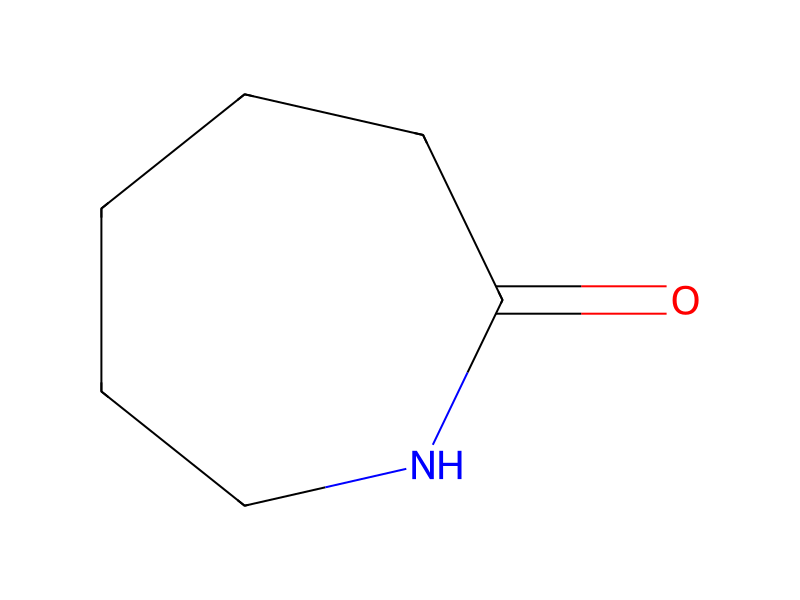
A 3-liter three-necked flask was charged with 144 g (1.27 moles) of ε-caprolactam, 2 L of toluene, and 1 L of pyridine. The mixture was stirred at 0° C. under nitrogen, to which was then added 256.5 g (1.27 moles) of p-sulfinylaminobenzoyl chloride. The mixture was slowly stirred until the temperature reached room temperature and then reacted for 14 hours. A deposited pyridine hydrochloride was filtered off, and the filtrate was washed twice with a 5% sodium hydrogencarbonate aqueous solution. A white residue obtained by distilling off the solvent of the organic phase was recrystallized twice from ethyl acetate to obtain N-(p-aminobenzoyl)caprolactam in a percent yield of 68%.