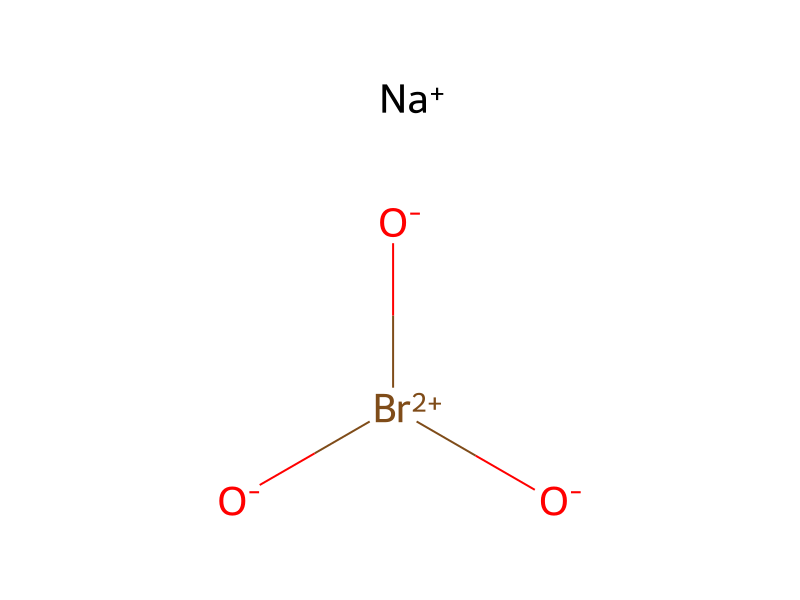
Acetonitrile (3.06 L) and N-(2-hydroxypropyl)-N′-[3-(trifluoromethyl)-phenyl]ethanediamide (200 g, 1 eq) were charged to a reaction vessel to give a white slurry. A slurry of ruthenium chloride hydrate (2.33 g, 0.02 eq) in water (0.21 L) was charged to the reactor. Sodium bromate (114.4 g, 1.1 eq) was dissolved in water (0.48 L) and added dropwise to the dark brown solution over 2 hours keeping the reaction temperature between 20-25° C. The reaction was then held at 20-25° C. for a further 4 hours. Water (3.4 L) was added to the mixture and the product collected by filtration. The filter cake was washed with water (0.84 L) and dried at 65° C. The title compound (177.2 g, 89.2%) was isolated as a pale grey fluffy solid.