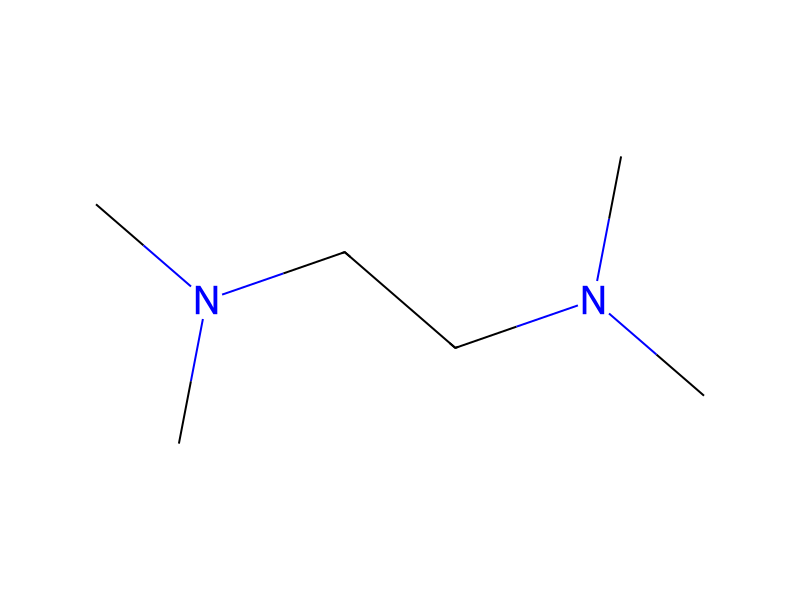
To a 1.53M solution of n-butyl lithium in hexane (0.47 mL, 0.72 mmol) were added under argon atmosphere TMEDA (0.11 mL, 0.72 mmol) at room temperature and then 2-methyl-4,5-dihydro-6H-cyclopenta[b]thiophen-6-one (0.11 g, 0.72 mmol) in anhydrous THF dropwise with ice cooling and stirring. The reaction mixture was stirred at room temperature for 1 hour and ice-cooled again. To this was added dropwise a solution of 1-ethyl-6-isopropylisatoic anhydride (Example 6, step 1) (0.11 g, 0.48 mmol) in anhydrous THF. The reaction mixture was stirred at room temperature for 2 hours and diluted with saturated aqueous solution of ammonium chloride. The organic layer was concentrated to dryness and the residue was dissolved in ethyl acetate. This solution was washed with saturated sodium chloride solution, dried with sodium sulfate and evaporated again. The residue was subjected to silica gel-chromatography (chloroform: acetone=9:1) and crystallization from diethyl ether to give the title compound. 1H-NMR(CDCl3) δ 1.33(6H,d,CH(CH3)2), 1.58(3H,t,CH2CH3), 2.64(3H,s,CH3), 3.10(1H,septet,CH), 3,78(2H,s,H-4), 4,49(2H,q,NCH3), 6.97(1H,s,H-3), 7.49(1H,d,H-9), 7.56(1H,dd,H-8), 8.45(1H,d,H-6)