반응식
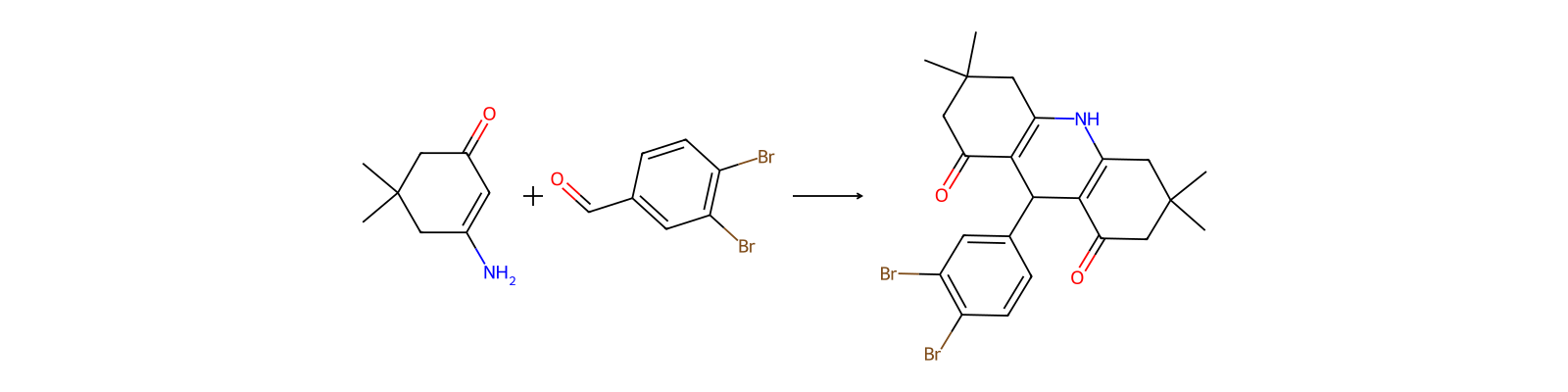
[NH2:1][C:2]1[CH2:7][C:6]([CH3:9])([CH3:8])[CH2:5][C:4](=[O:10])[CH:3]=1.[Br:11][C:12]1[CH:13]=[C:14]([CH:17]=[CH:18][C:19]=1[Br:20])[CH:15]=O>>[Br:11][C:12]1[CH:13]=[C:14]([CH:15]2[C:3]3[C:4](=[O:10])[CH2:5][C:6]([CH3:9])([CH3:8])[CH2:7][C:2]=3[NH:1][C:2]3[CH2:7][C:6]([CH3:9])([CH3:8])[CH2:5][C:4](=[O:10])[C:3]2=3)[CH:17]=[CH:18][C:19]=1[Br:20]참가 물질
3


실험 절차
Reaction of 3-amino-5,5-dimethyl-2-cyclohexen-1-one with 3,4-dibromobenzaldehyde in an analogous manner to that described in Example 1 gave 9-(3,4-dibromophenyl)-3,4,6,7,9,10-hexahydro-3,3,6,6-tetramethyl-1,8(2H,5H)-acridinedione. Crystallization from absolute ethanol gave a pale yellow crystalline solid of melting point >290° C. (decomposition).
출처 및 근거
- ORD 기록
- ord-f3d723a10e614dee9367b62f4ac2f903
- 출처 데이터셋
- uspto-grants-2000_12
- 특허 번호
- US06162918
연결된 노트
불러오는 중…