반응식

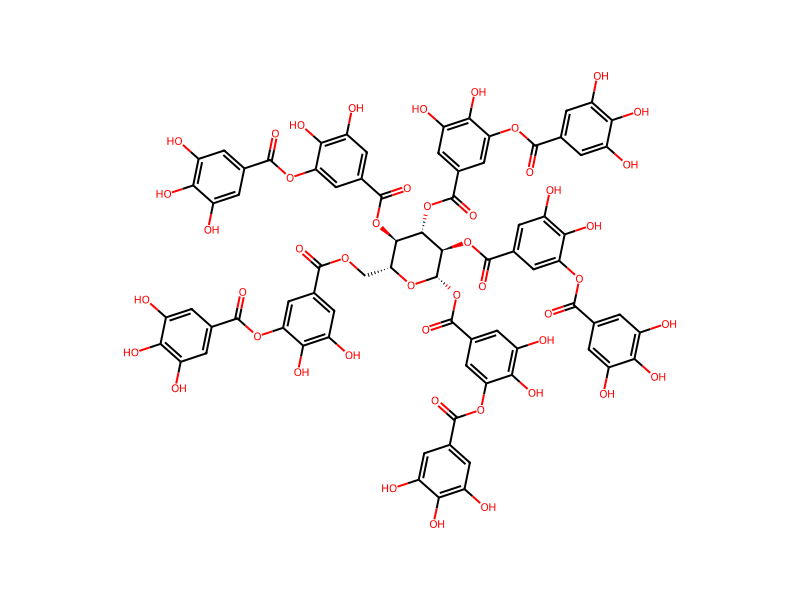
C1C(O)=C(O)C(O)=CC=1C(OC1C=C(C(OC[C@H]2O[C@@H](OC(C3C=C(O)C(O)=C(OC(C4C=C(O)C(O)=C(O)C=4)=O)C=3)=O)[C@H](OC(C3C=C(O)C(O)=C(OC(C4C=C(O)C(O)=C(O)C=4)=O)C=3)=O)[C@@H](OC(C3C=C(O)C(O)=C(OC(C4C=C(O)C(O)=C(O)C=4)=O)C=3)=O)[C@@H]2OC(C2C=C(O)C(O)=C(OC(C3C=C(O)C(O)=C(O)C=3)=O)C=2)=O)=O)C=C(O)C=1O)=O.[CH3:123][C:124]1[CH:129]=[C:128]([OH:130])[C:127]2[C:131]([C:133]3[C:138]([OH:139])=[CH:137][C:136](O)=[CH:135][C:134]=3[C:141](=O)[C:126]=2[CH:125]=1)=[O:132]>C1C=CC=CC=1>[CH3:123][C:124]1[CH:125]=[C:126]2[CH:141]=[C:134]3[C:133](=[C:131]([OH:132])[C:127]2=[C:128]([OH:130])[CH:129]=1)[C:138]([OH:139])=[CH:137][CH:136]=[CH:135]3참가 물질



실험 절차
Phytochemistry: The seeds contain tannic acid, mucilage (36%), fatty acid (2.56%), emodin and a toxalbumin. Chrysarobin (methyl-di hydroxy anthranol. M. P. 203-4° C.) has been isolated from the benzene extract of the seeds. The fatty oil contains: saturated fatty acids 19.7; linoleic acid, 31.4; oleic acid 30.7, linolenic acid, 6.3;volatile constituents, 0.7; un sapon matter 7.4%. Pharmacology: All parts of the plant have similar medicinal properties and are considered purgative, tonic, febrifugal, expectorant and diuretic. The plant is used as a vermifuge and to treat sore eyes, haematuria, rheumatism, dropsy, typhoid, asthma, blood disorders and is reportedly effective against leprosy. A decoction of the plant is used for the treatment of hysteria, dysentery and other stomach troubles. The roots are considered bitter, tonic, purgative, anthelmintic and diuretic. In ayurveda a paste made from the roots is considered specific ringworm and other skin ailments. The leaves are also used externally to relieve inflammatory swellings, rheumatism, wounds and sprains. The root bark is used as a quinine substitute to cure fever, and its decoction is used as a stimulant and as a specific medicine for gonorrhoea and hepatic troubles.
출처 및 근거
- ORD 기록
- ord-92979b72e81446c9a0d77a191536ae05
- 출처 데이터셋
- uspto-grants-2007_07
- 특허 번호
- US07247322B2
연결된 노트
불러오는 중…