반응식
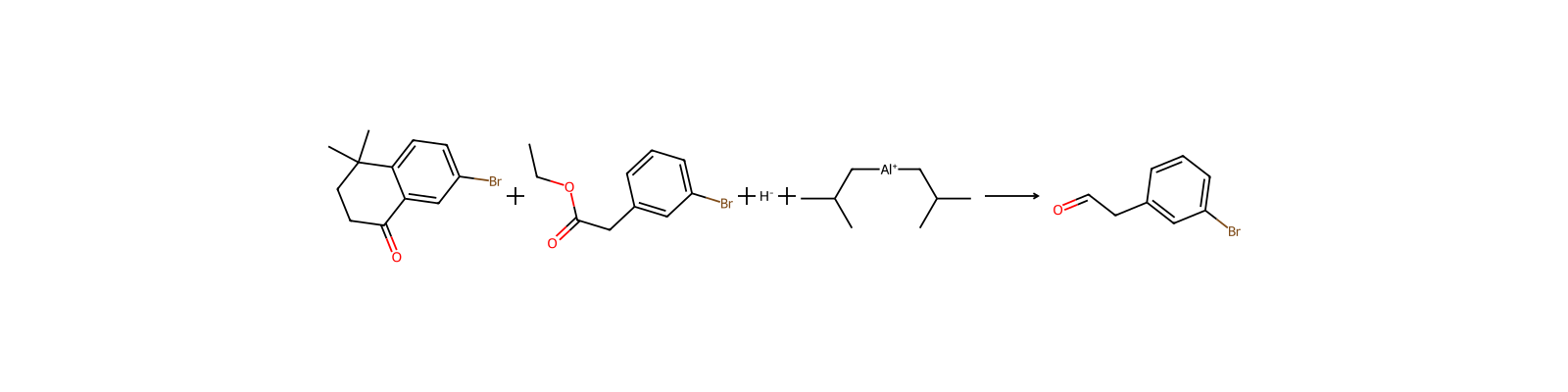
BrC1C=C2C(C(C)(C)CCC2=O)=CC=1.[Br:15][C:16]1[CH:17]=[C:18]([CH2:22][C:23](OCC)=[O:24])[CH:19]=[CH:20][CH:21]=1.[H-].C([Al+]CC(C)C)C(C)C>>[Br:15][C:16]1[CH:17]=[C:18]([CH2:22][CH:23]=[O:24])[CH:19]=[CH:20][CH:21]=1참가 물질

실험 절차
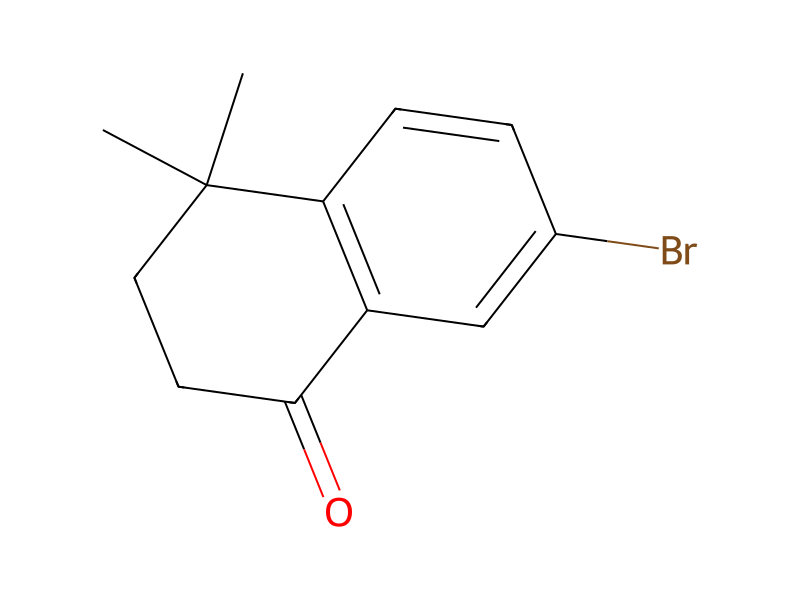
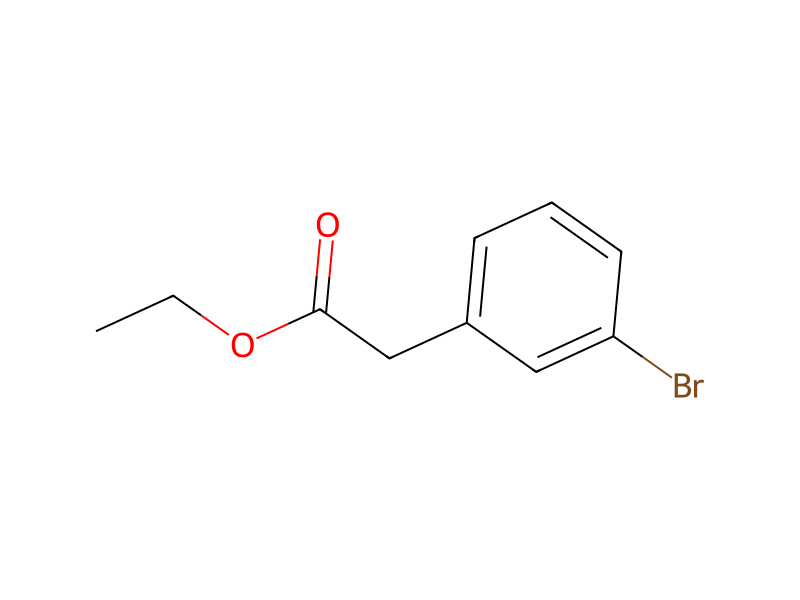
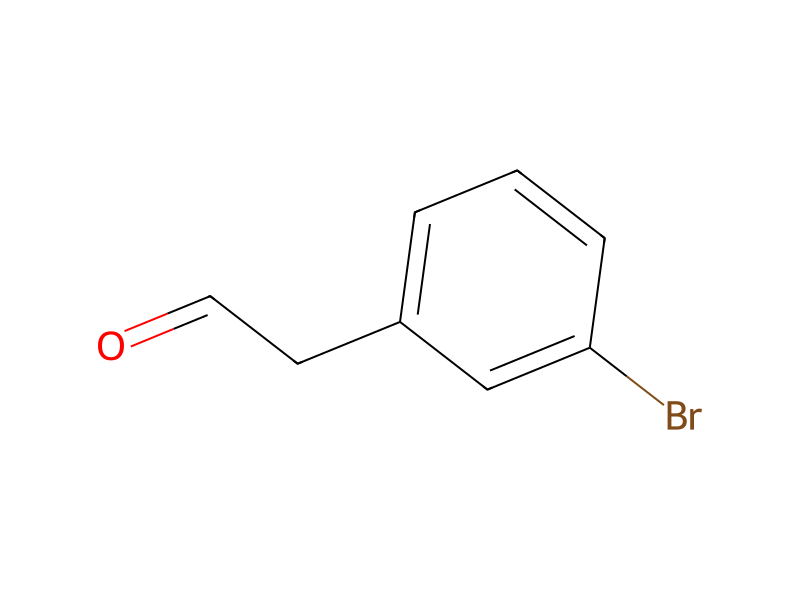
Compound G can be obtained as described in J. Med. Chem. 1995, 38, 4764-4767, and as shown in Reaction Scheme 1. Thus, referring now specifically to Reaction Scheme 1, ethyl 3-bromophenylacetate (Compound B, made by esterification of 3-bromophenylacetic acid) is reduced with diisobutylaluminum hydride (DIBAL H) to yield (3-bromophenyl)acetaldehyde. (3-Bromophenyl)acetaldehyde is reacted in a Wittig reaction with (carbethoxymethylene)triphenylphosphorane to provide a mixture of E and Z ethyl 4-(3-bromophenyl)but-2-enoates. The latter compounds are hydrogenated to yield ethyl 4-(3-bromophenyl)butanoate (Compound D). Compound D is reacted with the Grignard reagent derived from methylbromide to give the tertiary alcohol 5-(3-bromophenyl)-2-methylpentan-2-ol (Compound E) (It should be apparent to those skilled in the art, that the choice of the Grignard reagent used in this reaction step determines the nature of the R1 substituent in the resulting compounds of the invention.) Compound E is then treated with acid to cyclize it and to form 6-bromo-1,2,3,4-tetrahydro-1,1-dimethylnaphthalene (Compound F). Compound F is oxidized with chromium trioxide to yield 7-bromo-3,4-dihydro-4,4-dimethylnaphthalen-1(2H)-one (Compound G). The isomeric compound, 6-bromo-3,4-dihydro-4,4-dimethylnaphthalen-1(2H)-one (Compound H) can be obtained, starting with ethyl (4-bromophenyl)acetate, in accordance with the sequence of reactions illustrated in Reaction Scheme 1 for Compound G.
후처리
- custom1995, 38, 4764-4767, and as shown in Reaction Scheme 1
출처 및 근거
- ORD 기록
- ord-a12f514f3a754a2d8e08fdd22d30526b
- 출처 데이터셋
- uspto-grants-1998_03
- 특허 번호
- US05723666
연결된 노트
불러오는 중…