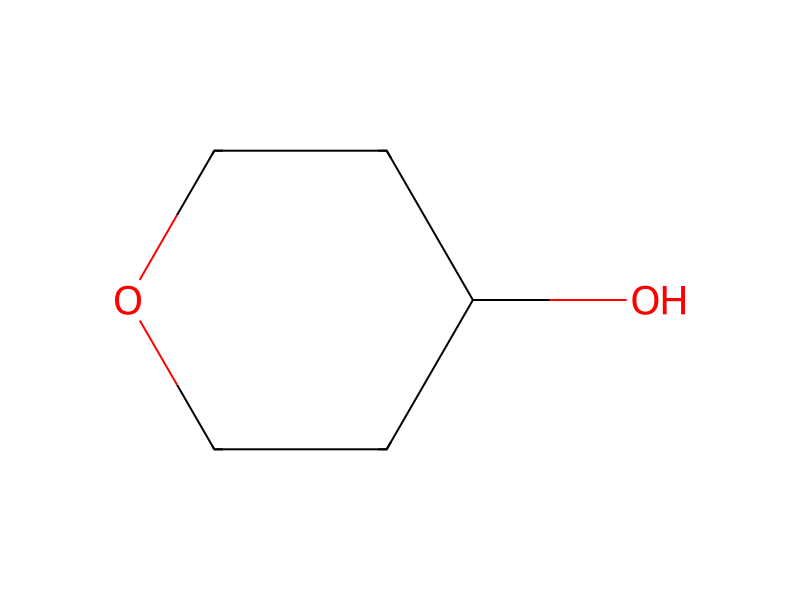
Di-tert-butyl azodicarboxylate (16.3 g) was added portionwise to a stirred mixture of 7-benzyloxy-5-hydroxy-3-pivaloyloxymethyl-3,4-dihydroquinazolin-4-one (17 g), 4-hydroxytetrahydropyran (5.4 g) and methylene chloride (200 ml) that had been cooled to 5° C. The mixture was allowed to warm to ambient temperature and was stirred for 2 hours. The mixture was evaporated and the residue was dissolved in a saturated methanolic ammonia solution. The resultant mixture was stirred at ambient temperature for 16 hours. The mixture was evaporated and the residue was triturated under diethyl ether. The solid so obtained was dried under vacuum to give 7-benzyloxy-5-tetrahydropyran-4-yloxy-3,4-dihydroquinazolin-4-one (12.5 g); NMR Spectrum: (DMSOd6) 1.6–1.7 (m, 2H), 1.85–1.95 (m, 2H), 3.5 (m, 2H), 3.9 (m, 2H), 4.75 (m, 1H), 5.22 (s, 2H), 6.7 (d, 1H), 6.8 (d, 1H), 7.3–7.5 (m, 5H), 7.9 (s, 1H); Mass Spectrum: M+H+ 353.