Dipropylamine → 2-(5-dipropylaminomethyl-1,2,4-oxadiazol-3-ylmethyl)-2,3-dihydro-1H-isoindol-1,3-dione
HRID 1378115
반응식

[CH2:1]([NH:4][CH2:5][CH2:6][CH3:7])[CH2:2][CH3:3].Cl[CH2:9][C:10]1[O:14][N:13]=[C:12]([CH2:15][N:16]2[C:24](=[O:25])[C:23]3[C:18](=[CH:19][CH:20]=[CH:21][CH:22]=3)[C:17]2=[O:26])[N:11]=1>C(Cl)Cl>[CH2:1]([N:4]([CH2:9][C:10]1[O:14][N:13]=[C:12]([CH2:15][N:16]2[C:24](=[O:25])[C:23]3[C:18](=[CH:19][CH:20]=[CH:21][CH:22]=3)[C:17]2=[O:26])[N:11]=1)[CH2:5][CH2:6][CH3:7])[CH2:2][CH3:3]참가 물질
4
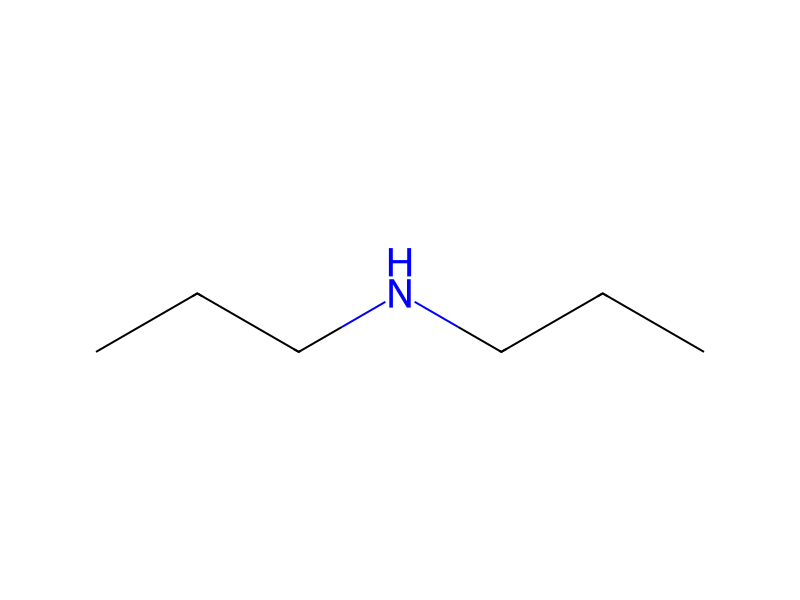



실험 절차
35.6 ml (260 mmol) of dipropylamine were added dropwise at room temperature to a solution of 36 g (130 mmol) of 2-(5-chloromethyl-1,2,4-oxadiazol-3-ylmethyl)-2,3-dihydro-1H-isoindole-1,3-dione in 300 ml of methylene chloride, whereupon the mixture was stirred at room temperature for 24 hours. The yellow solution was washed with sat. sodium hydrogen carbonate solution, dried with sodium sulfate, filtered and evaporated. The residue obtained was chromatographed (silica gel, methylene chloride/aqueous ammonia 19:1). There were obtained 38 g (85%) of 2-(5-dipropylaminomethyl-1,2,4-oxadiazol-3-ylmethyl)-2,3-dihydro-1H-isoindol-1,3-dione as a beige oil, Rf=0.12 (silica gel, methylene chloride/aqueous ammonia 19:1).