반응식

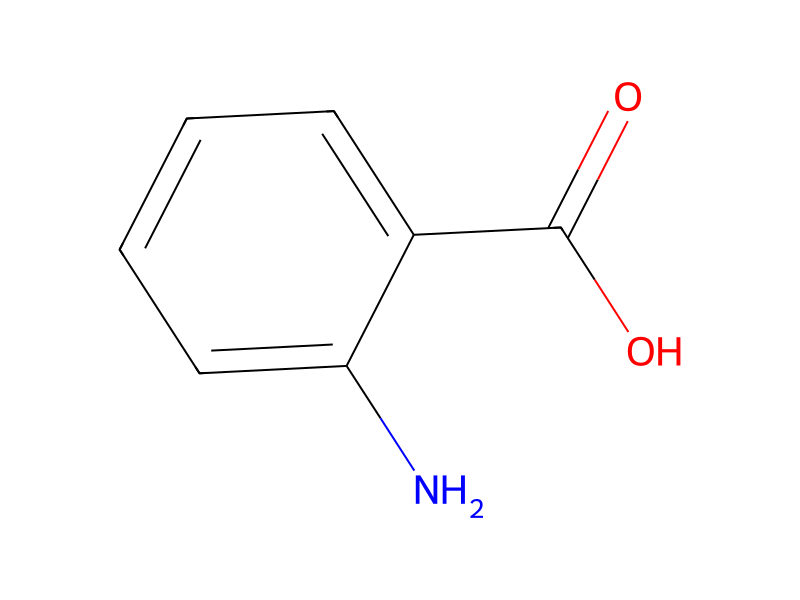
[C:1]([OH:10])(=[O:9])[C:2]1[C:3](=[CH:5][CH:6]=[CH:7][CH:8]=1)[NH2:4].[CH2:11]=O.[H][H]>>[CH3:11][NH:4][C:3]1[C:2](=[CH:8][CH:7]=[CH:6][CH:5]=1)[C:1]([OH:10])=[O:9]참가 물질



실험 절차
At least two processes for the preparation of the subject compound are known in the prior art. In one such process anthranilic acid is used as the starting compound and reacted with formaldehyde and hydrogen as described in J. Soc. Org. Synthetic Chem. (Japan) 11,434 (1953), Chem. Abst. 49, 955a (1955), to produce N-methylanthranilic acid. This resulting intermediate is thereafter reacted with thionyl chloride and methanol to produce the desired methyl N-methylanthranilate. This step is described in Aust. J. Chem. 27, 537 (1974). The disadvantages of this process lie in the use of a relatively expensive starting material and the relatively poor yields of final product. Typical reported reaction yields based on the starting compound amount to about 36% overall for the two steps.
후처리
- customAt least two processes for the preparation of the subject compound
출처 및 근거
- ORD 기록
- ord-3818787d25e649d68cc025fc8c94109e
- 출처 데이터셋
- uspto-grants-1986_04
- 특허 번호
- US04582922
연결된 노트
불러오는 중…