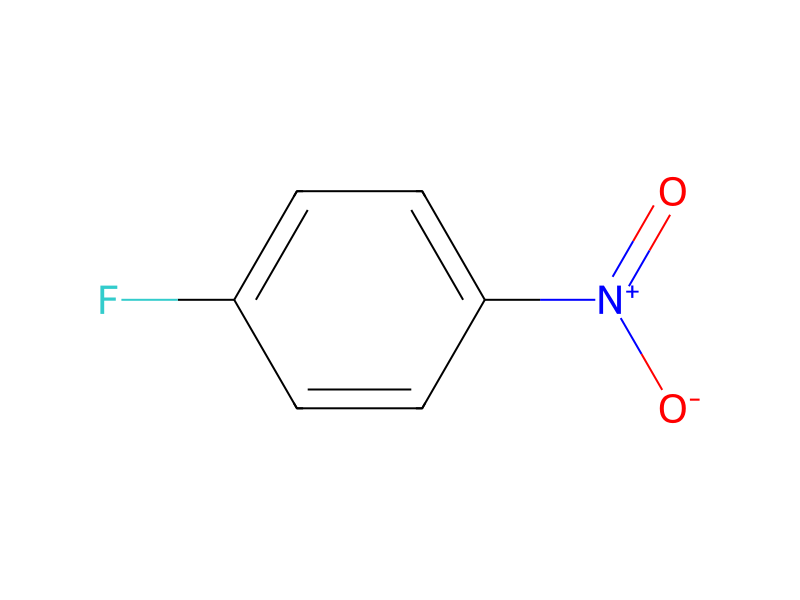
1.41 g (0.01 mol) of 1-fluoro-4-nitrobenzene and 1.62 ml (0.02 mol) of pyridine were introduced into a three-necked flask under nitrogen. 8.75 ml (0.04 mol) of 4,7,10-trioxatridecane-1,13-diamine were added dropwise with stirring. The mixture was heated to 70° C. After reaction for 24 hours, the reaction mixture was cooled and 40 ml of distilled water were then added with vigorous stirring. Next, the reaction mixture was extracted with dichloromethane, washed twice with water, dried over MgSO4 and then evaporated under vacuum. The crude product, isolated in the form of a yellow oil comprising about 90% of expected mono-nitro derivative, was purified on a column of silica, eluting with ethyl acetate (to separate out the dinitro derivative), and then with methanol (to recover the expected mono-nitro derivative). 1.8 g of expected product (19) were obtained in the form of a dark yellow oil.