홈MCPSkills워크벤치OpenChem
홈워크벤치알림마이페이지
llms.txt · skill.md · MCP 가이드개인정보처리방침 · 이용약관 · 지원v1.8.5
  1. 홈
  2. /반응

Acetic Acid → 4-{[4-(4-Chloropyridin-2-yl)-4-fluoropiperidin-1-yl]methyl}-8-fluoro-N-[(1S,2S)-2-hydroxycyclohexyl]quinoline-2-carboxamide

HRID 1430080
인쇄

반응식

[F:1][C:2]1[CH:3]=[CH:4][CH:5]=[C:6]2[C:11]=1[N:10]=[C:9]([C:12]([NH:14][C@H:15]1[CH2:20][CH2:19][CH2:18][CH2:17][C@@H:16]1[OH:21])=[O:13])[CH:8]=[C:7]2[CH:22]=O.Cl.Cl.[Cl:26][C:27]1[CH:32]=[CH:31][N:30]=[C:29]([C:33]2([F:39])[CH2:38][CH2:37][NH:36][CH2:35][CH2:34]2)[CH:28]=1.C(O)(=O)C.C([BH3-])#N>ClCCCl.C(N(CC)CC)C.C(Cl)Cl>[Cl:26][C:27]1[CH:32]=[CH:31][N:30]=[C:29]([C:33]2([F:39])[CH2:34][CH2:35][N:36]([CH2:22][C:7]3[C:6]4[C:11](=[C:2]([F:1])[CH:3]=[CH:4][CH:5]=4)[N:10]=[C:9]([C:12]([NH:14][C@H:15]4[CH2:20][CH2:19][CH2:18][CH2:17][C@@H:16]4[OH:21])=[O:13])[CH:8]=3)[CH2:37][CH2:38]2)[CH:28]=1
참가 물질실험 절차후처리출처 및 근거반응 노트

참가 물질

8

반응물 4

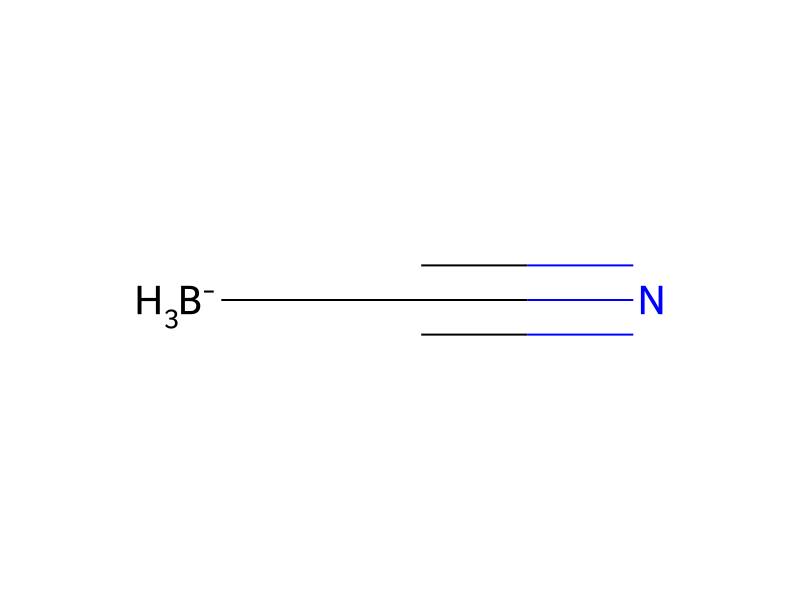
HCID 176Acetic AcidHCID 498716CyanoborohydrideHCID 867264694-Chloro-2-(4-fluoropiperidin-4-yl)pyridine dihydrochlorideHCID 867264718-fluoro-4-formyl-N-[(1S,2S)-2-hydroxycyclohexyl]quinoline-2-carboxamide

생성물 1

HCID 710141264-{[4-(4-Chloropyridin-2-yl)-4-fluoropiperidin-1-yl]methyl}-8-fluoro-N-[(1S,2S)-2-hydroxycyclohexyl]quinoline-2-carboxamide

시약·촉매·용매 3

HCID 8471Triethylamine촉매HCID 111,2-Dichloroethane용매HCID 6344Dichloromethane용매

실험 절차

To a solution of 8-fluoro-4-formyl-N-[(1S,2S)-2-hydroxycyclohexyl]quinoline-2-carboxamide (C9) (0.080 g, 0.25 mmol) in DCE (3 mL) was 4-chloro-2-(4-fluoropiperidin-4-yl)pyridine dihydrochloride (C5) (0.080 g, 0.28 mmol) and triethylamine (6 drops). After 5 min, acetic acid (0.043 mL, 0.76 mmol) and MP-cyanoborohydride were added. The mixture was irradiated in a microwave reactor at 100° C. for 20 min, then diluted with CH2Cl2 and was washed with brine. The organic solution was dried over sodium sulfate, filtered, and concentrated in vacuo. The resultant residue was purified via silica gel chromatography eluting with 0-5% methanol in dichloromethane to provide the title compound (Example C) as a white solid that gave a proton NMR spectra consistent with theory and a mass ion (ES+) of 515.0 for M+H+. 1H NMR (400 MHz, CDCl3) δ 8.44 (d, J=5.2 Hz, 1H), 8.38 (s, 1H), 8.29 (d, J=7.8 Hz, 1H), 8.17 (d, J=8.5 Hz, 1H), 7.60-7.55 (m, 2H), 7.47-7.42 (m, 1H), 7.22-7.20 (m, 1H), 4.03 (s, 2H), 3.94-3.86 (m, 1H), 3.63-3.56 (m, 1H), 3.42 (br s, 1H), 2.86-2.83 (m, 2H), 2.62-2.56 (m, 2H), 2.47-2.30 (m, 2H), 2.17-2.11 (m, 2H), 1.89-1.78 (m, 4H), 1.56-1.31 (m, 4H).

후처리

  1. customThe mixture was irradiated in a microwave reactor at 100° C. for 20 min
  2. washwas washed with brine
  3. dry with materialThe organic solution was dried over sodium sulfate
  4. filtrationfiltered
  5. concentrationconcentrated in vacuo
  6. customThe resultant residue was purified via silica gel chromatography
  7. washeluting with 0-5% methanol in dichloromethane

출처 및 근거

ORD 기록
ord-2b03cb4ca50e48338d4ec91d3797ccbd
출처 데이터셋
uspto-grants-2015_01
DOI
10.6084/m9.figshare.5104873.v1
특허 번호
US08940765B2

반응 노트

이 페이지에서참가 물질실험 절차후처리출처 및 근거반응 노트