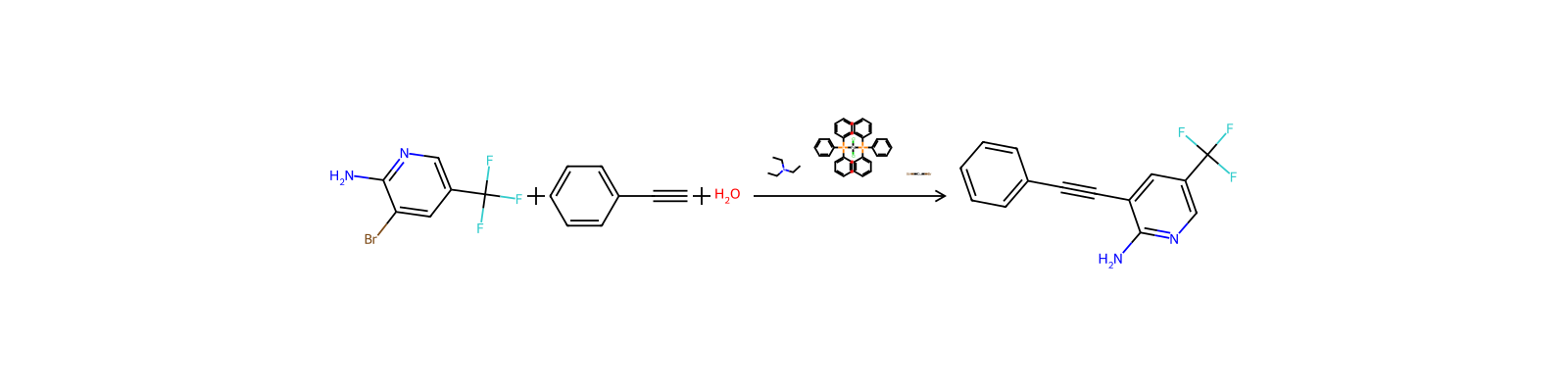
Under an atmosphere of argon, to a solution of 3-bromo-5-(trifluoromethyl)pyridin-2-amine (the compound described in Bio. Org. Med. Chem., 9, 1715 (1999)) (163 mg) in triethylamine (1.5 mL), ethynylbenzene (82 μL), bis(triphenylphosphine)palladium dichloride (43 mg) and copper bromide (14 mg) were added. The reaction mixture was stirred for overnight at 60° C. To the reaction mixture, water was added and extracted with ethyl acetate. The extract was washed with a saturated aqueous solution of sodium chloride, dried with anhydrous magnesium sulfate and concentrated. The obtained residue was purified by column chromatography on silica gel (hexane:ethyl acetate=5:1) to give the title compound (26 mg) having the following physical data.