홈MCP워크벤치Skills
홈워크벤치알림마이페이지
llms.txt · MCP 가이드개인정보처리방침 · 이용약관 · 지원v1.8.0
  1. 홈
  2. /반응

Tetrahydrofuran → Ethyl 4-{[2-(methylsulfanyl)pyrimidin-5-yl]methyl}quinoline-2-carboxylate

HRID 1497331
노트
인쇄 미리보기

반응식

HRID 1497331 반응식
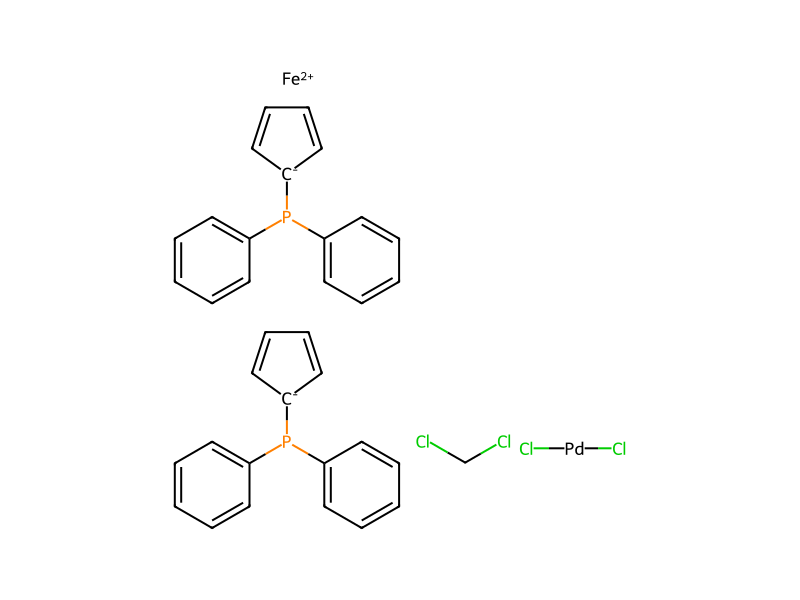
CC1(C)C(C)(C)OB([C:9]2[C:18]3[C:13](=[CH:14][CH:15]=[CH:16][CH:17]=3)[N:12]=[C:11]([C:19]([O:21][CH2:22][CH3:23])=[O:20])[CH:10]=2)O1.Br[CH2:26][C:27]1[CH:28]=[N:29][C:30]([S:33][CH3:34])=[N:31][CH:32]=1.C(=O)([O-])[O-].[Cs+].[Cs+].C1COCC1>C1C=CC(P(C2C=CC=CC=2)[C-]2C=CC=C2)=CC=1.C1C=CC(P(C2C=CC=CC=2)[C-]2C=CC=C2)=CC=1.Cl[Pd]Cl.[Fe+2].C(Cl)Cl.O>[CH3:34][S:33][C:30]1[N:31]=[CH:32][C:27]([CH2:26][C:9]2[C:18]3[C:13](=[CH:14][CH:15]=[CH:16][CH:17]=3)[N:12]=[C:11]([C:19]([O:21][CH2:22][CH3:23])=[O:20])[CH:10]=2)=[CH:28][N:29]=1
참가 물질반응 조건실험 절차후처리출처 및 근거반응 노트

참가 물질

7

반응물 4

HCID 8028TetrahydrofuranHCID 10796Cesium carbonateHCID 60209908Ethyl 4-(4,4,5,5-tetramethyl-1,3,2-dioxaborolan-2-yl)quinoline-2-carboxylateHCID 60209911HCID 60209911, 화합물

생성물 1

HCID 60209912Ethyl 4-{[2-(methylsulfanyl)pyrimidin-5-yl]methyl}quinoline-2-carboxylate

시약·촉매·용매 2

HCID 178418807
HCID 178418807, 화합물
촉매
HCID 962Water용매

반응 조건

온도
77 °C

실험 절차

In a microwave vial containing ethyl 4-(4,4,5,5-tetramethyl-1,3,2-dioxaborolan-2-yl)quinoline-2-carboxylate (K4) (0.15 g, 0.46 mmol), 5-(bromomethyl)-2-(methylsulfanyl)pyrimidine (N3) (0.12 g, 0.55 mmol), cesium carbonate (0.45 g, 1.4 mmol), and PdCl2(dppf)-CH2Cl2 adduct (0.037 g, 0.05 mmol) was added 4.1 mL THF and 0.41 mL water. The reaction mixture was heated to 77° C. for 1 h. The reaction mixture was cooled to room temperature, quenched with water, extracted with ethyl acetate, washed with brine, dried over sodium sulfate, filtered, and concentrated. The resultant residue was subjected to silica gel chromatography eluting with 0-70% ethyl acetate in hexanes to afford ethyl 4-{[2-(methylsulfanyl)pyrimidin-5-yl]methyl}quinoline-2-carboxylate (N4) that gave a mass ion (ES+) of 340.3 for M+H+. The above compound was converted to the titled compound by the procedure described in Example 11 that gave proton NMR spectra consistent with theory and a mass ion (ES+) of 411.1481 for M+H30 . 1H NMR (400 MHz, CDCl3) δ 8.42 (s, 2H), 8.37 (d, J=6.4 Hz, 1H), 8.19 (d, J=8.2 Hz, 1H), 8.14 (s, 1H), 7.99 (d, J=8.4 Hz, 1H), 7.84-7.80 (m, 1H), 7.70-7.66 (m, 1H), 4.44 (s, 2H), 4.13 (dd, J=4.9, 11.2 Hz, 1H), 4.08-4.00 (m, 2H), 3.77-3.71 (m, 1H), 3.55-3.49 (m, 1H), 3.30-3.25 (m, 1H), 2.54 (s, 3H), 2.15-2.11 (m, 1H) 1.95-1.85 (m, 1H).


후처리

  1. temperatureThe reaction mixture was cooled to room temperature
  2. customquenched with water
  3. extractionextracted with ethyl acetate
  4. washwashed with brine
  5. dry with materialdried over sodium sulfate
  6. filtrationfiltered
  7. concentrationconcentrated
  8. washeluting with 0-70% ethyl acetate in hexanes

출처 및 근거

ORD 기록
ord-152cef85e598459bb67cfe31177e127f
출처 데이터셋
uspto-grants-2015_12
DOI
10.6084/m9.figshare.5104873.v1
특허 번호
US09199939B2

반응 노트

불러오는 중…

이 페이지에서참가 물질반응 조건실험 절차후처리출처 및 근거반응 노트