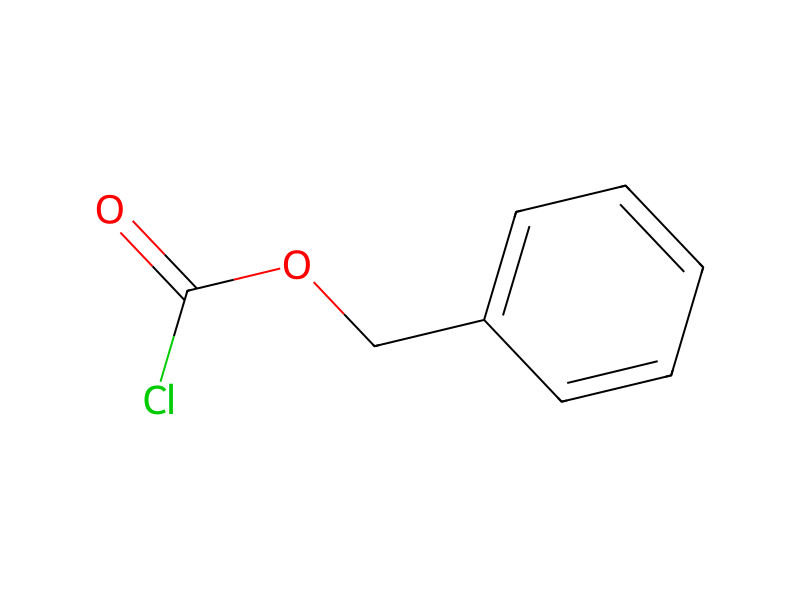
Benzyl chloroformate → Benzyl [4-(4-pyridinyl)phenyl]carbamate
HRID 1510244
반응식

[N:1]1[CH:6]=[CH:5][C:4]([C:7]2[CH:13]=[CH:12][C:10]([NH2:11])=[CH:9][CH:8]=2)=[CH:3][CH:2]=1.[CH2:14]([O:21][C:22](Cl)=[O:23])[C:15]1[CH:20]=[CH:19][CH:18]=[CH:17][CH:16]=1>ClCCl.N1C=CC=CC=1>[N:1]1[CH:6]=[CH:5][C:4]([C:7]2[CH:13]=[CH:12][C:10]([NH:11][C:22](=[O:23])[O:21][CH2:14][C:15]3[CH:20]=[CH:19][CH:18]=[CH:17][CH:16]=3)=[CH:9][CH:8]=2)=[CH:3][CH:2]=1참가 물질
5




실험 절차
To a suspension of 4-(4-pyridinyl)aniline (50 mg) in dichloromethane (1.50 mL) and pyridine (356.4 μL) was added dropwise benzyloxycarbonyl chloride (75.5 μL) at ambient temperature and the mixture was stirred at the same temperature for 1 hour. The resulting mixture was concentrated in vacuo and water (10 mL) was added to the residue. The aqueous solution was extracted with ethyl acetate (15 mL) and the organic layer was washed successively with saturated sodium bicarbonate aqueous solution and brine, then dried and concentrated. The residual solid was triturated with diisopropylether (2.0 mL) to give benzyl [4-(4-pyridinyl)phenyl]carbamate (70.3 mg) as a yellow solid.