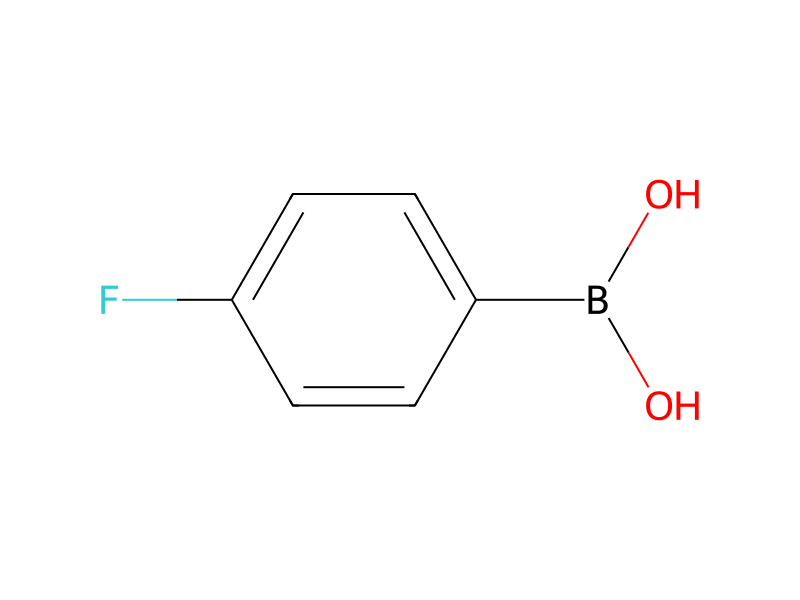
Cl[C:2]1[CH:3]=[CH:4][C:5]2[N:6]=[CH:7][NH:8][C:9](=[O:12])[C:10]=2[N:11]=1.[F:13][C:14]1[CH:19]=[CH:18][C:17](B(O)O)=[CH:16][CH:15]=1.C([O-])([O-])=O.[K+].[K+].C(O)(=O)C>O1CCOCC1.O.C1C=CC([P]([Pd]([P](C2C=CC=CC=2)(C2C=CC=CC=2)C2C=CC=CC=2)([P](C2C=CC=CC=2)(C2C=CC=CC=2)C2C=CC=CC=2)[P](C2C=CC=CC=2)(C2C=CC=CC=2)C2C=CC=CC=2)(C2C=CC=CC=2)C2C=CC=CC=2)=CC=1>[F:13][C:14]1[CH:19]=[CH:18][C:17]([C:2]2[CH:3]=[CH:4][C:5]3[N:6]=[CH:7][NH:8][C:9](=[O:12])[C:10]=3[N:11]=2)=[CH:16][CH:15]=1To a solution of 6-chloro-pyrido[3,2-d]pyrimidin-4(3H)one (1.0 g, 5.5 mmol) in dioxane (80 ml) and water (20 ml) was added 4-fluorophenylboronic acid (770 mg, 5.5 mmol), K2CO3 (2.28 g, 16.5 mmol), and tetrakis(triphenylphosphine)palladium(0) (290 mg, 0.25 mmol). The mixture was heated at reflux for 20 hours. After cooling to room temperature, the reaction mixture was neutralized to pH 5-6 with acetic acid, concentrated to a small volume, filtered and washed with water to yield a crude product. The crude residue was purified by silica gel flash chromatography, the mobile phase being a mixture of methanol and dichloromethane, in a volume ratio of 1:30, yielding the title compound as a white solid (1.2 g, yield: 90%) which was characterised by its mass spectrum as follows: MS (m/z): 242 ([M+H]+, 100).