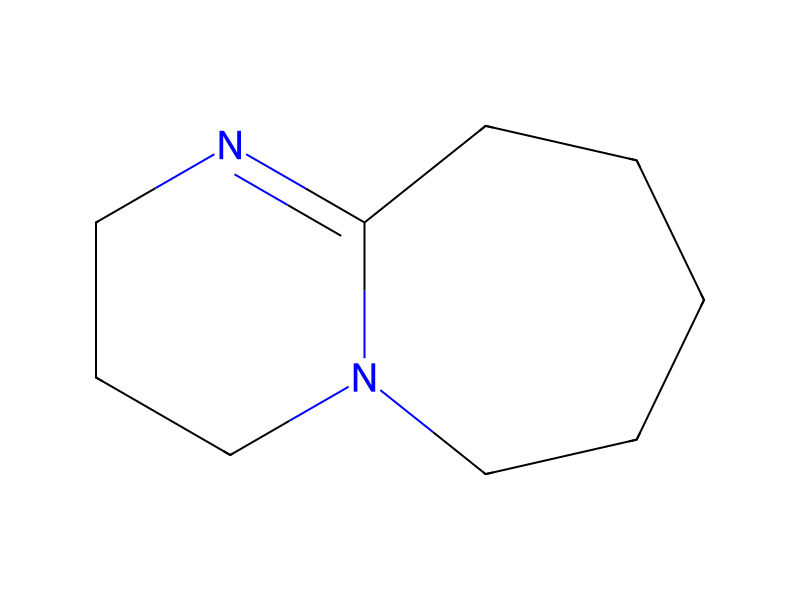
Cl[C:2]1[N:7]=[C:6]([N:8]2[CH2:13][CH2:12][N:11]([C:14]([O:16][CH2:17][CH3:18])=[O:15])[CH2:10][CH2:9]2)[C:5]([N+:19]([O-:21])=[O:20])=[CH:4][CH:3]=1.[N:22]12[CH2:32][CH2:31][CH2:30]N=C1CCCCC2.C1(N)CC1>C(O)C>[CH:32]1([NH:22][C:2]2[N:7]=[C:6]([N:8]3[CH2:13][CH2:12][N:11]([C:14]([O:16][CH2:17][CH3:18])=[O:15])[CH2:10][CH2:9]3)[C:5]([N+:19]([O-:21])=[O:20])=[CH:4][CH:3]=2)[CH2:30][CH2:31]1A solution of 126.0 g (0.4 mole) of 4-(6-chloro-3-nitro-2-pyridinyl)-1-piperazinecarboxylic acid, ethyl ester (prepared as described in European Patent Publication No. 9425), 76.1 g (0.5 mole) of 1,8-diazabicyclo[5.4.0]undec-7-ene (DBU), 28.6 g (0.5 mole) of cyclopropylamine and 500 ml of absolute ethanol was stirred at room temperature for 48 hours. The solution was then heated at reflux for four hours and concentrated in vacuo. The residue was partitioned between chloroform and water. The chloroform layer was dried over magnesium sulfate and concentrated in vacuo. The residue was triturated with ether to give 64.0 g of the title compound, mp 100°-103° C.