반응식
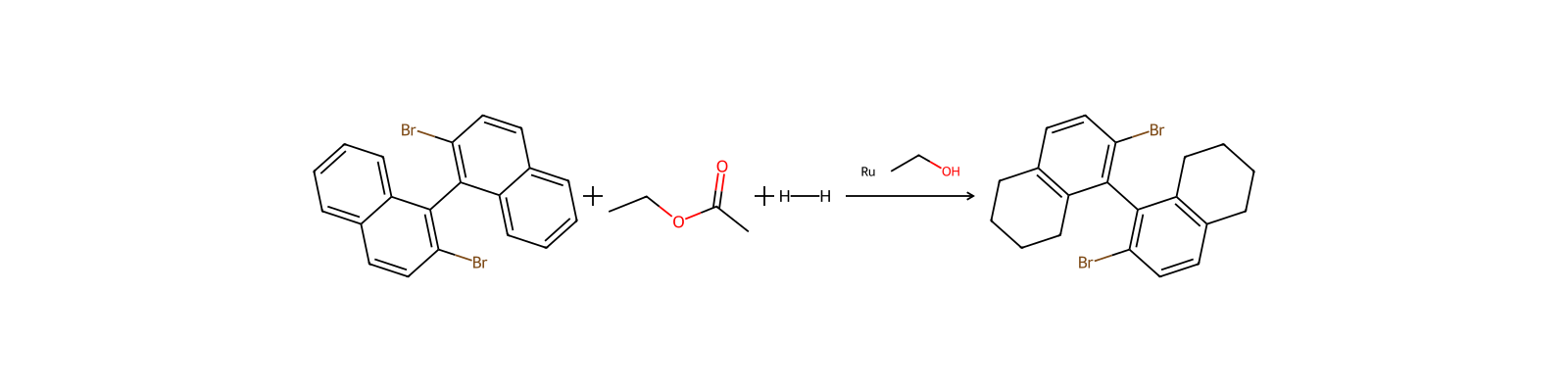
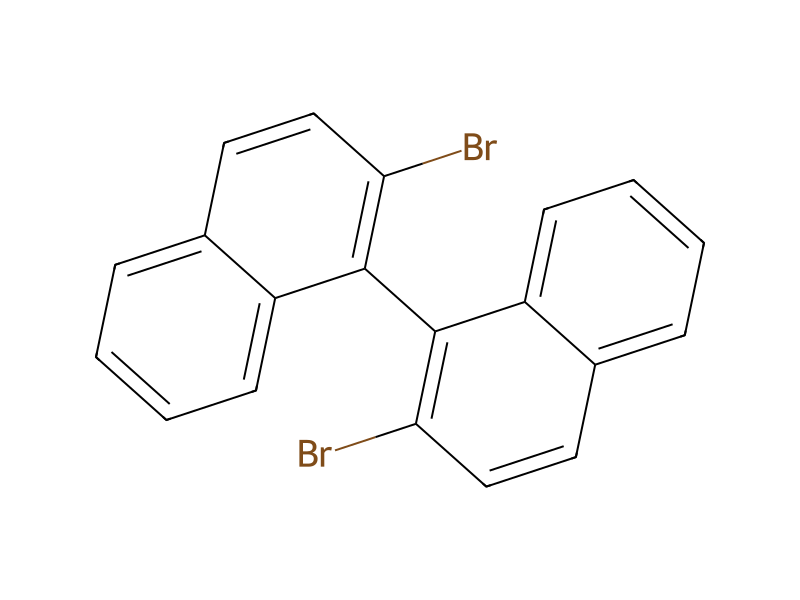
[Br:1][C:2]1[CH:11]=[CH:10][C:9]2[C:4](=[CH:5][CH:6]=[CH:7][CH:8]=2)[C:3]=1[C:12]1[C:21]2[C:16](=[CH:17][CH:18]=[CH:19][CH:20]=2)[CH:15]=[CH:14][C:13]=1[Br:22].C(OCC)(=O)C.[H][H]>[Ru].C(O)C>[Br:1][C:2]1[CH:11]=[CH:10][C:9]2[CH2:8][CH2:7][CH2:6][CH2:5][C:4]=2[C:3]=1[C:12]1[C:21]2[CH2:20][CH2:19][CH2:18][CH2:17][C:16]=2[CH:15]=[CH:14][C:13]=1[Br:22]참가 물질





반응 조건
- 온도
- 30 °C
실험 절차
Into a 500-ml stainless steel-made autoclave were introduced 35 g (0.085 mole) of 2,2'-dibromo-1,1'-binaphthyl (III), 5.25 g of 5%-ruthenium-on=carbon (manufactured by NECHEM CAT Inc.), 130 ml of ethyl acetate, and 130 ml of 95% ethanol. Hydrogenation was conducted at a hydrogen pressure of 50 kg/cm2 and a temperature of 100° C. for 20 hours, and it was then ascertained that the molar amount of hydrogen absorbed by the substrate had become four times that of the substrate. Thereafter, the reaction mixture was cooled to 30° C. and filtered to remove the catalyst. The resulting filtrate was allowed to stand at room temperature for a night, and crystals deposited were then collected by filtration. Thus, 30.6 g of the titled compound (IV) was obtained.
후처리
- customabsorbed by the substrate
- filtrationfiltered
- customto remove the catalyst
- waitto stand at room temperature for a night
- filtrationcrystals deposited were then collected by filtration
출처 및 근거
- ORD 기록
- ord-ebc3091b10114e6f9c5195ebe29ae605
- 출처 데이터셋
- uspto-grants-1993_04
- 특허 번호
- US05206399
연결된 노트
불러오는 중…