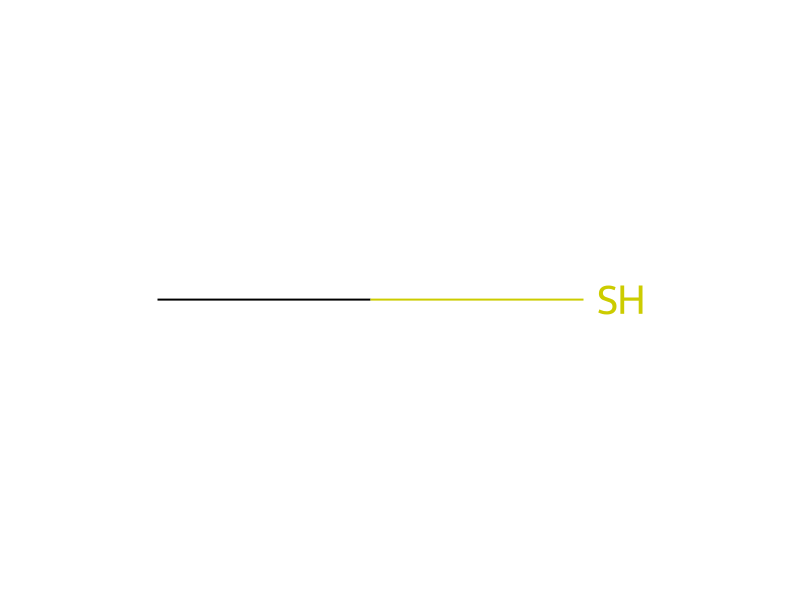
[CH3:1][C:2]1[C:7](=[O:8])[CH2:6][CH:5]([C:9]([CH3:11])=[CH2:10])[CH2:4][CH:3]=1.[CH3:12][SH:13]>C(N(CC)CC)C>[CH3:1][C:2]1[C:7](=[O:8])[CH2:6][CH:5]([C:9]([CH3:11])=[CH2:10])[CH2:4][CH:3]=1.[CH3:12][S:13][CH:3]1[CH:2]([CH3:1])[C:7](=[O:8])[CH2:6][CH:5]([C:9]([CH3:11])=[CH2:10])[CH2:4]115.0 g of carvone are mixed with 0.5 g of triethylamine. 20 ml of methyl mercaptan are condensed in this mixture at room temperature. After standing overnight in the autoclave, the mixture is heated to 50° C for a further 2 hours. After removal of the excess methyl mercaptan, the reaction product is fractionally distilled in vacuum. After a small fore-run of unreacted carvone, there are obtained 14.9 g of 6-methylthio-p-menth-8-en-2-one in the form of a mixture of two isomers in the ratio 1:4 (boiling point 105°-107°/0.2 mm Hg, nD20 1.5067), corresponding to a yield of 78% of the theory. The odour of the mixture is reminiscent of boiled white cabbage with a caraway and onion peel note.