Acetone → 4-Ethoxy-2,3-difluorobenzoic acid
HRID 1644127
반응식

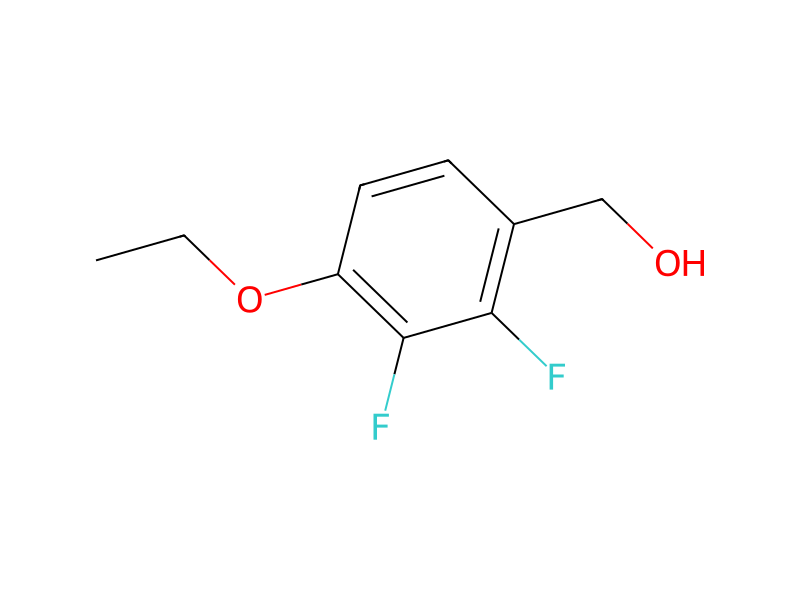
CC(C)=[O:3].[CH2:5]([O:7][C:8]1[CH:15]=[CH:14][C:11]([CH2:12][OH:13])=[C:10]([F:16])[C:9]=1[F:17])[CH3:6]>[O-2].[Cr+3].[O-2].[O-2].[Cr+3].O>[CH2:5]([O:7][C:8]1[CH:15]=[CH:14][C:11]([C:12]([OH:3])=[O:13])=[C:10]([F:16])[C:9]=1[F:17])[CH3:6]참가 물질
5




실험 절차
Acetone solution (140 mL) containing 4-ethoxy-2,3-difluorobenzyl alcohol (2.1 g) was dropped into a 1.5 M sulfuring acid solution (70 mL) containing chromium (III) oxide (4.23 g), at 0° C. over one hour. The reaction mixture was stirred at room temperature for 24 hours, and added with water to thereby terminate the reaction. The organic layer was extracted three times with ethyl acetate, the organic layers were combined, and the combined organic layer was extracted twice with a 1 M aqueous sodium hydroxide solution. The organic layer was then neutralized with a 2 M hydrochloric acid, extracted three times with ethyl acetate, the organic layers were combined, and the combined organic layer was washed with saturated sodium chloride solution. The organic layer was dried over anhydrous sodium sulfate, and the solvent was vaporized off under reduced pressure, to thereby obtain 4-ethoxy-2,3-difluorobenzoic acid (7) (yield=1.8 g, yield ratio=80%) as a white solid.