Benzaldehyde → alpha-L-mannopyranose
반응식

C1(NN=[CH:9][C@@H:10]([C@@H:12]([C@H:14]([C@H:16]([CH2:18][OH:19])[OH:17])[OH:15])[OH:13])[OH:11])C=CC=CC=1.O.C(=[O:28])C1C=CC=CC=1.C(O)(=O)C1C=CC=CC=1>C(O)C>[OH:19][C@@H:18]1[O:11][C@@H:10]([CH2:9][OH:28])[C@H:12]([OH:13])[C@@H:14]([OH:15])[C@H:16]1[OH:17]참가 물질
6





실험 절차
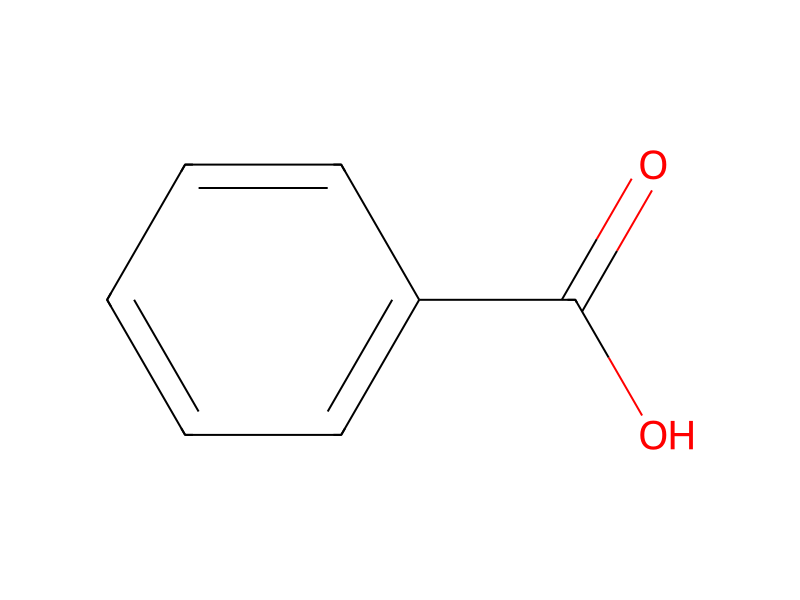
The hydrazone (20 g.) was then refluxed for 3 hours with a solution containing water (200 ml.), ethanol (40 ml.), benzaldehyde (25 ml.) and benzoic acid (2.5 g.). The solution was cooled and then decanted from benzaldehyde phenylhydrazone, extracted three times with chloroform, decolorized with carbon and concentrated at reduced pressure. The resulting syrup was further evaporated with several portions of absolute ethanol to remove residual water and the resulting syrup (10 g.) was left to crystallize. The crystals were filtered with ethanol to give α-L-mannopyranose, m.p. 125°-126°, [α]D -26.9°→-14.4° (24 hr., c 2.0, water) compared to m.p. 128°-132°, [α]D -14.5° (equilibrium, c 3.4, water).