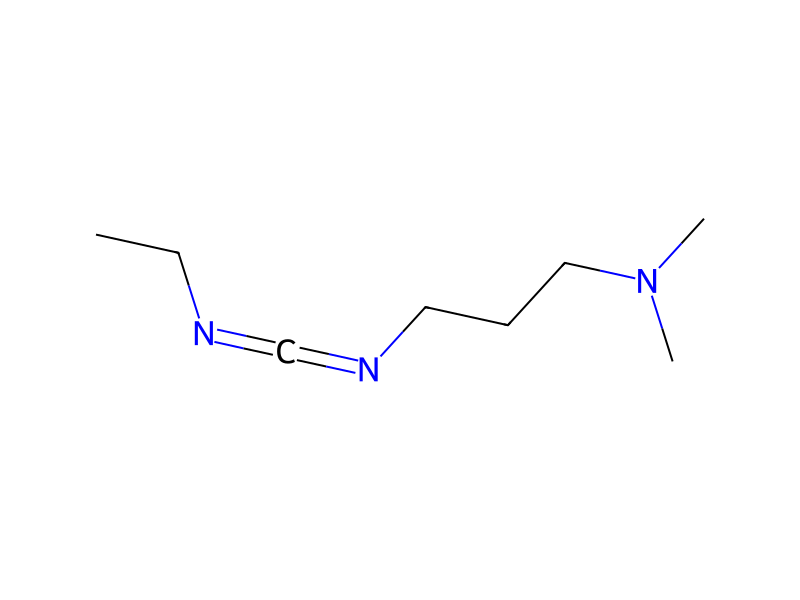
To a solution of 1-{2-ethoxy-4-[(ethylamino)carbonyl]phenyl}-1H-1,2,3-triazole-4-carboxylic acid (0.36 g) obtained in Example 131f) in DMF (3 ml) were successively added cyclopropylamine (0.10 ml), triethylamine (0.20 ml), HOBt (0.22 g) and WSC (0.27 g), and the reaction mixture was stirred at room temperature overnight. To the reaction mixture were added saturated aqueous sodium hydrogen carbonate solution and ethyl acetate, and the organic layer was separated. The solvent was evaporated under reduced pressure, and the residue was recrystallized from ethanol-water to give the title compound as a white powder (0.31 g, 76%).