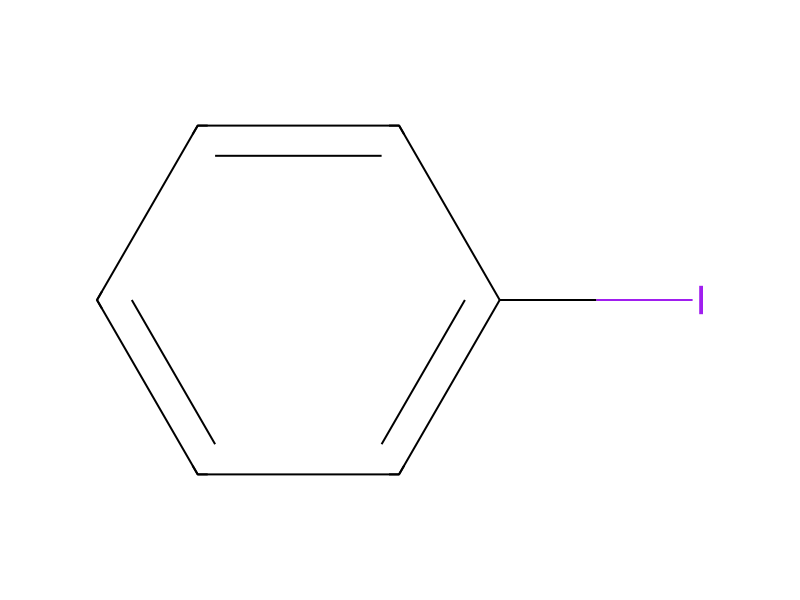
The starting 1,2-dihydro-4-methyl-1-phenyl-2-quinolone (1) is prepared either by an Ullmann coupling according to a literature procedure (e.g. Wawzonek et al. J. HETEROCYCLIC CHEM., 25, 381 (1988)) or via the reaction of the corresponding diarylamine with diketene followed by acid cyclization (e.g. R. C. Elderfield, ed., HETEROCYCLIC COMPOUNDS vol. 4, pp. 1-331, 1952). Thus 10.0 g (62.9 mmoles) of 2-hydroxy-4-methylquinoline is heated at reflux with 24.0 g (377 mmoles) of copper powder, 8.68 g (62.9 mmoles) of potassium carbonate and 19.2 g (94 mmoles) of iodobenzene for 48 hours. The reaction is cooled to room temperature, partitioned between water and ethyl acetate, filtered, and the organic layer is dried over magnesium sulfate. The crude product is purified on a silica gel column, eluting with 1:1 ethyl acetate/hexanes to yield 8.1 g of the desired product.