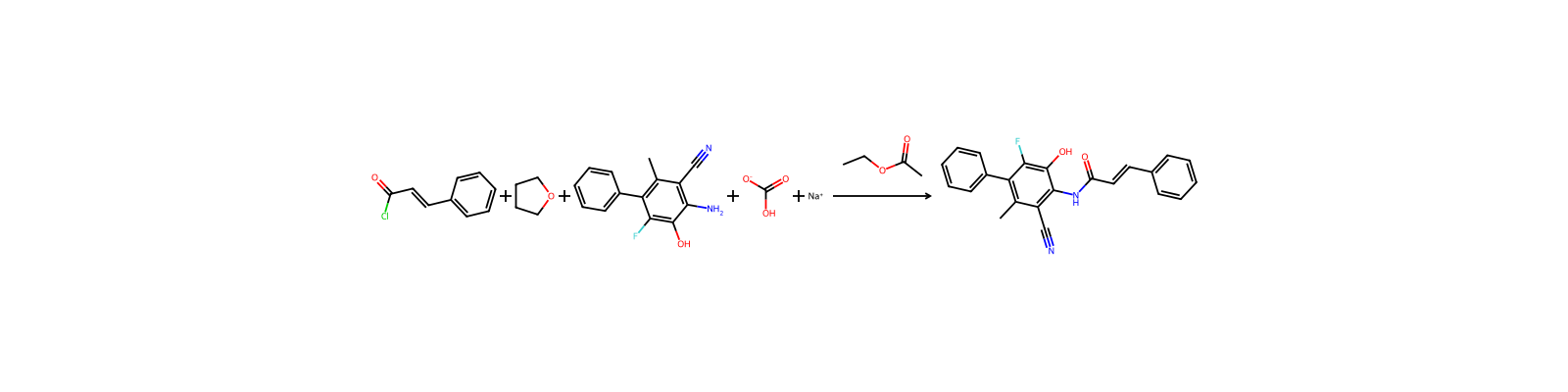
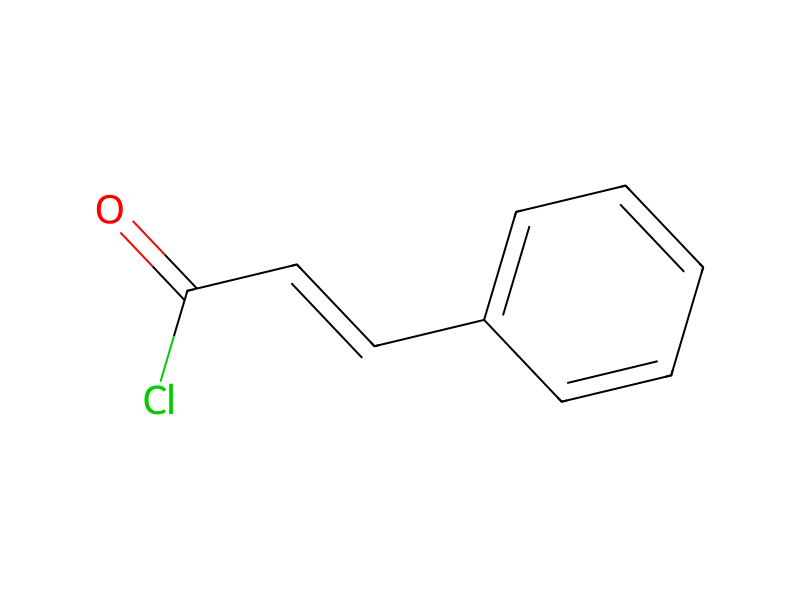
Under nitrogen atmosphere, cinnamoyl chloride (378 mg, 2.27 mmol) was dropwise added to a tetrahydrofuran solution (10 ml) of 2-amino-5-phenyl-4-fluoro-3-hydroxy-6-methylbenzonitrile (I-41) (500 mg, 2.06 mmol) and sodium hydrogencarbonate (399 mg, 4.75 mmol) cooled with ice, followed by stirring at room temperature for 17 hours and stirring at 60° C. for 1 hour. After cooling, ethyl acetate was added to the reaction liquid, followed by washing with water and saturated brine. The obtained organic layer was dried over anhydrous sodium sulfate, the solvent was evaporated away under reduced pressure.