반응식

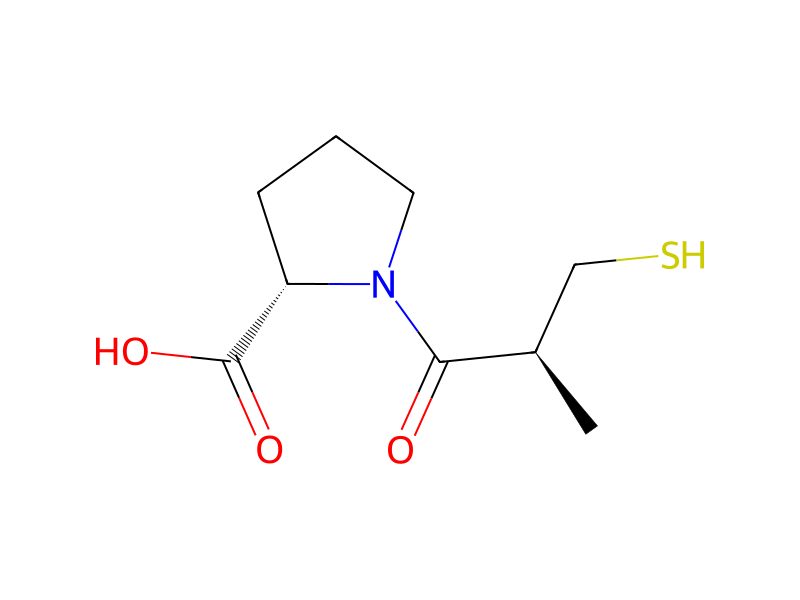
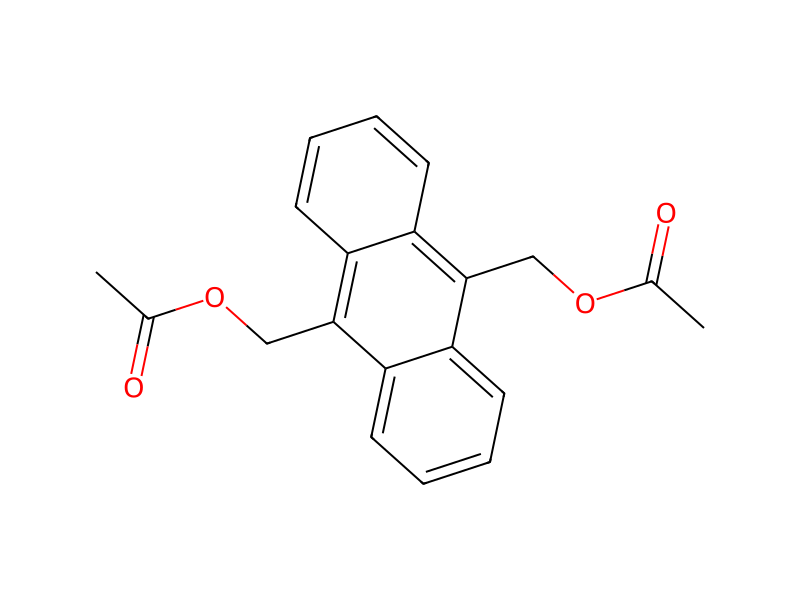
C[C@@H:2]([C:7]([N:9]1[C@H:13]([C:14](O)=O)[CH2:12][CH2:11][CH2:10]1)=O)CSN=O.C[C@@H](C(N1[C@H:27]([C:28](O)=O)[CH2:26][CH2:25][CH2:24]1)=O)CS.[N:31]([O-])=O.[Na+]>CC(OCC1C2C(=CC=CC=2)C(COC(C)=O)=C2C=1C=CC=C2)=O.S(=O)(=O)(O)O>[C:13]1([NH:9][CH2:7][CH2:2][NH2:31])[C:14]2[C:24](=[CH:25][CH:26]=[CH:27][CH:28]=2)[CH:10]=[CH:11][CH:12]=1참가 물질
6




실험 절차
Typical preparation of S-nitrosocaptopril involve the reaction of 50 mM captopril with 50 mM NaNO2 in 0.1N acetic or sulfuric acid at room temperature for five minutes, after which the reaction solution is passed over a cation exchange resin, e.g., Dowex 50 in the protonated form, and the product eluted with water. The fractions that give positive reactions with N-(1-naphthyl)ethylenediamine, after exposure to 0.15% HgCl2 and diazotization with sulfanilamide, are lyophilized. Hygroscopic, bright red crystals (m.p. 98°-104° C.) were obtained that were shown to be S-nitrosocaptopril by NMR in deuterated DMSO and by mass spectroscopy.
후처리
- washthe product eluted with water
출처 및 근거
- ORD 기록
- ord-3b218ab125e64d9e989469548684052b
- 출처 데이터셋
- uspto-grants-1996_07
- 특허 번호
- US05536723
연결된 노트
불러오는 중…