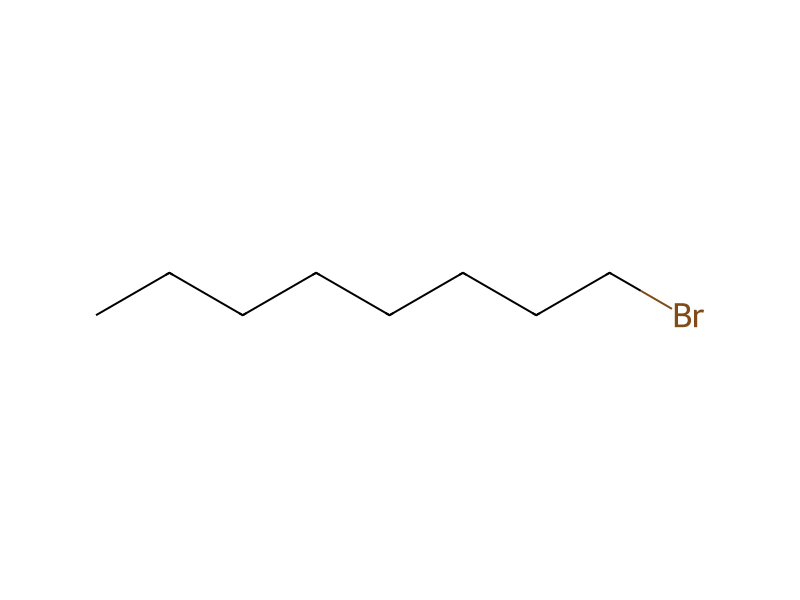
A solution of 3.03 g (12.3 mmol) of 3-chloroperbenzoic acid in 30 ml of methylene chloride is added dropwise at a temperature of 0° to 5° C. to 3.23 g (8.2 mmol) of 5-octyl-2-(4-octyloxyphenyl)pyridine (prepared, for example, analogously to C. S. Giam, J. Staut, J. Chem. Soc., Chem. Commun. 478 (1970) from pyridine, 4-octyloxyphenyllithium and 1-bromooctane) in 30 ml of methylene chloride. After a reaction time of 3 hours at room temperature, the mixture is washed once with 5% sodium carbonate and twice with sodium chloride solution, the organic phase is dried over sodium sulfate, filtered off, and the solvent is removed by distillation. Purification of the residue by chromatography (silica gel, 8:2 methylene chloride/ethyl acetate) gives 2.20 g of 5-octyl-2-(4-octyloxyphenyl)pyridine N-oxide. ##STR13##