4-Piperidineethanol → HCID 68303884, 화합물
반응식

[Cl:1][C:2]1[CH:3]=[C:4]([CH:16]=[CH:17][CH:18]=1)[C:5]([NH:7][C:8]1[C:9](Cl)=[N:10][CH:11]=[C:12]([Cl:14])[CH:13]=1)=[O:6].[NH:19]1[CH2:24][CH2:23][CH:22]([CH2:25][CH2:26][OH:27])[CH2:21][CH2:20]1>C(#N)C>[Cl:1][C:2]1[CH:3]=[C:4]([CH:16]=[CH:17][CH:18]=1)[C:5]([NH:7][C:8]1[C:9]([N:19]2[CH2:24][CH2:23][CH:22]([CH2:25][CH2:26][OH:27])[CH2:21][CH2:20]2)=[N:10][CH:11]=[C:12]([Cl:14])[CH:13]=1)=[O:6]참가 물질
4
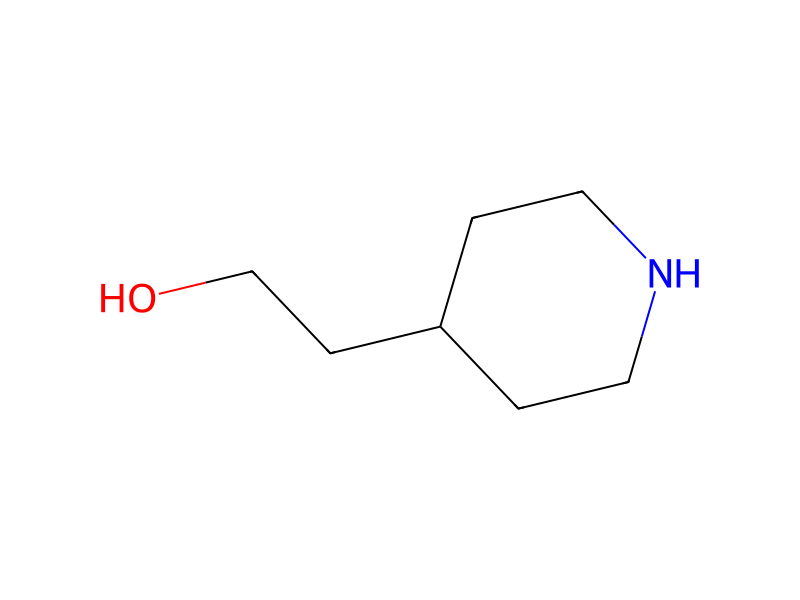



반응 조건
- 온도
- 180 °C
실험 절차
A mixture of 1.06 g (5.00 mmol) of 3-chloro-N-(2,5-dichloro-pyridin-3-yl)-benzamide and 0.646 g (5.00 mmol) of 4-piperidine ethanol in acetonitrile (25 mL) is heated in a microwave reactor at 180° C. for 4 hours. Upon standing at room temperature a solid precipitates from solution. The solid is collected by filtration, washed with cold acetonitrile, and dried on the filter pad to provide 1.97 g (76%) of 3-chloro-N-[5′-chloro-4-(2-hydroxy-ethyl)-3,4,5,6-tetrahydro-2H-[1,2′]bipyridinyl-3′-yl]-benzamide as a clear solid.