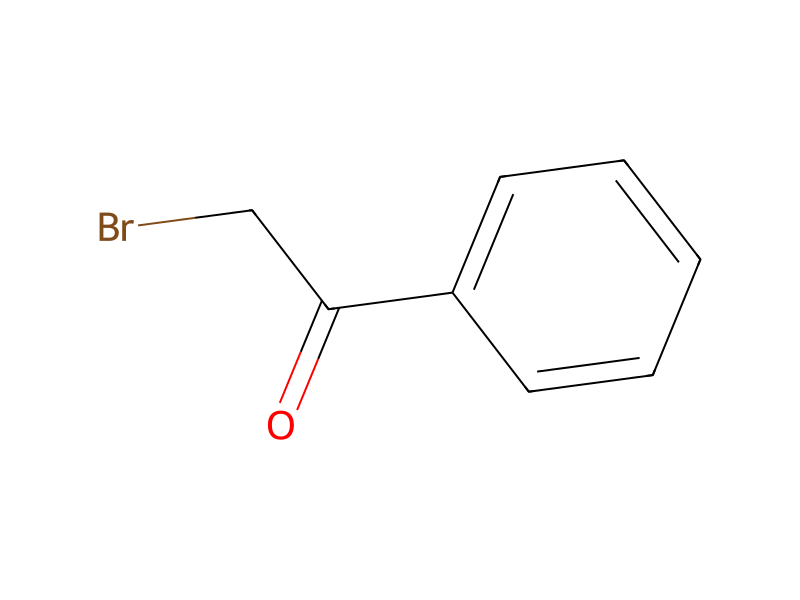
Phenacyl bromide → 3-((Bis(3-fluorophenyl)methoxy)carbonyl)-1-(2-oxo-2-phenylethyl)-1-azoniabicyclo[2.2.2]octane bromide
HRID 1910499
반응식

[N:1]12[CH2:8][CH2:7][CH:4]([CH2:5][CH2:6]1)[CH:3]([C:9]([O:11][CH:12]([C:20]1[CH:25]=[CH:24][CH:23]=[C:22]([F:26])[CH:21]=1)[C:13]1[CH:18]=[CH:17][CH:16]=[C:15]([F:19])[CH:14]=1)=[O:10])[CH2:2]2.[Br:27][CH2:28][C:29]([C:31]1[CH:36]=[CH:35][CH:34]=[CH:33][CH:32]=1)=[O:30]>C(#N)C>[Br-:27].[F:26][C:22]1[CH:21]=[C:20]([CH:12]([C:13]2[CH:18]=[CH:17][CH:16]=[C:15]([F:19])[CH:14]=2)[O:11][C:9]([CH:3]2[CH:4]3[CH2:5][CH2:6][N+:1]([CH2:28][C:29](=[O:30])[C:31]4[CH:36]=[CH:35][CH:34]=[CH:33][CH:32]=4)([CH2:8][CH2:7]3)[CH2:2]2)=[O:10])[CH:25]=[CH:24][CH:23]=1참가 물질
4



실험 절차
Bis(3-fluorophenyl)methyl quinuclidine-3-carboxylate (95 mg, 0.27 mmol, prepared as in example 4) and 2-bromo-1-phenylethanone (58.2 mg, 0.29 mmol) were dissolved in acetonitrile (5 ml) and stirred at room temperature overnight. The solvent was evaporated, and the resulting residue was purified by flash chromatography (DCM/MeOH=95/5 to 9/1) to obtain 3-((bis(3-fluorophenyl)methoxy)carbonyl)-1-(2-oxo-2-phenylethyl)-1-azoniabicyclo[2.2.2]octane bromide (110 mg, racemic mixture).