Pyridine → HCID 8823202, 화합물
반응식

[CH2:1]1[C:9]2[C:4](=[CH:5][C:6]([S:10](Cl)(=[O:12])=[O:11])=[CH:7][CH:8]=2)[CH2:3][CH2:2]1.[NH2:14][C:15]1[CH:19]=[CH:18][S:17][C:16]=1[C:20]([O:22][CH3:23])=[O:21].N1C=CC=CC=1>ClCCl>[CH2:1]1[C:9]2[C:4](=[CH:5][C:6]([S:10]([NH:14][C:15]3[CH:19]=[CH:18][S:17][C:16]=3[C:20]([O:22][CH3:23])=[O:21])(=[O:12])=[O:11])=[CH:7][CH:8]=2)[CH2:3][CH2:2]1참가 물질
5

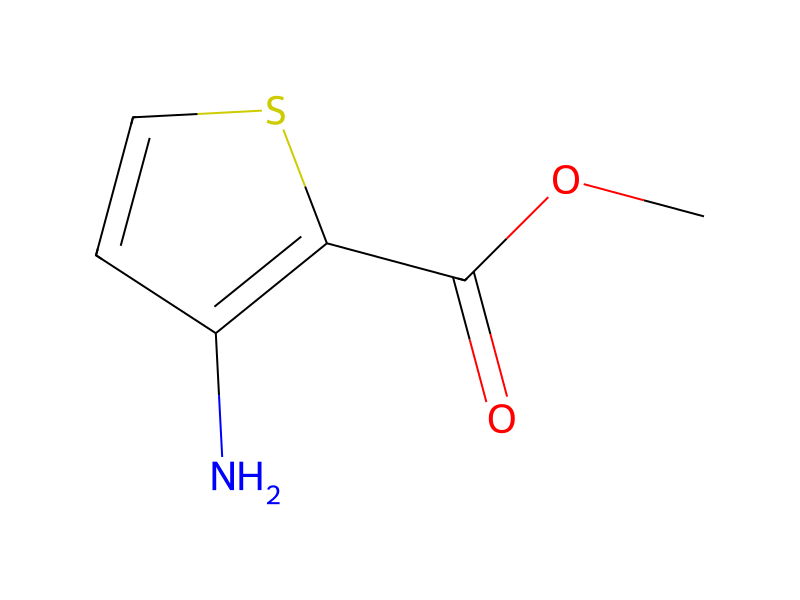



실험 절차
To a solution of 2,3-dihydro-1H-indene-5-sulfonyl chloride (0.5 g; 2.3 mmol) in dichloromethane (5 mL) at room temperature, methyl 3-aminothiophene-2-carboxylate (0.3 g; 1.9 mmol) was added followed by pyridine (0.32 g; 4.0 mmol) and then stirred at room temperature under a nitrogen atmosphere for 24 hours. The reaction mixture was concentrated under reduced pressure and then taken up in ethyl acetate (50 mL) and extracted with water. The aqueous layer separated and extracted with ethyl acetate (2×50 mL). The combined organic phases were successively washed with water and aqueous saturated sodium chloride, dried over magnesium sulfate, filtered and concentrated under reduced pressure. The resulting crude residue was recrystallized from acetonitrile to yield the title product as a white solid (0.3 g).