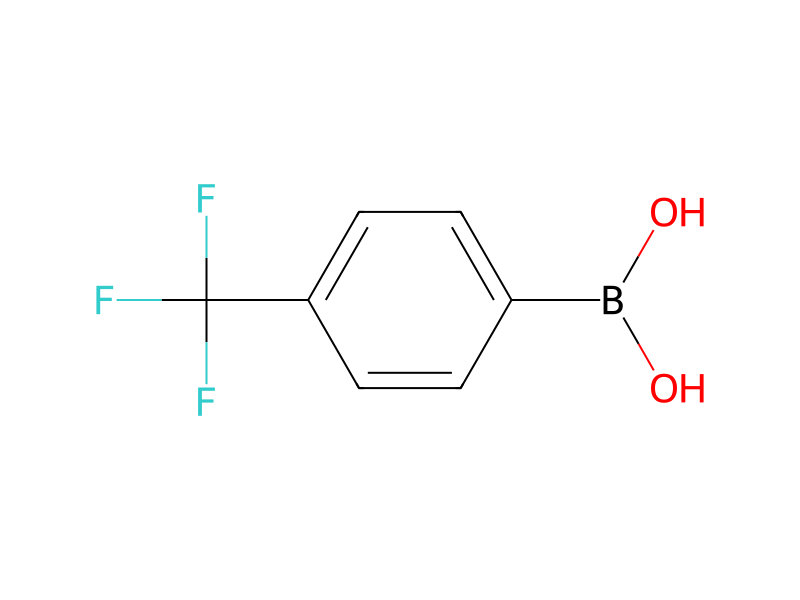
5.1 g (20 mmol) of 9-bromoanthracene, 3.8 g (20 mmol) of 4-trifluoromethylphenylboronic acid, and 244 mg (0.8 mmol) of tri(o-tolyl)phosphine were put into a 100-mL three-neck flask, and nitrogen substitution in the system was carried out. 20 mL of ethylene glycol dimethyl ether (DME) was added to this mixture, and the mixture was stirred under reduced pressure and degassed. After that, 45 mg (0.20 mmol) of palladium acetate(II) and 10 mL (2.0 mol/L) of a potassium carbonate solution were added. This reaction mixture was stirred at 80° C. for 3 hours under nitrogen gas stream. Then, the reaction mixture was cooled to the room temperature, and a solid that was precipitated was collected by suction filtration. The collected solid was dissolved in toluene, and the solution was subjected to suction filtration through Florisil, celite, and then alumina. The filtrate was condensed to obtain a solid, and the solid was recrystallized with ethanol, whereby 5.7 g of a white powdery solid, which was a target matter, was obtained with the yield of 88%.