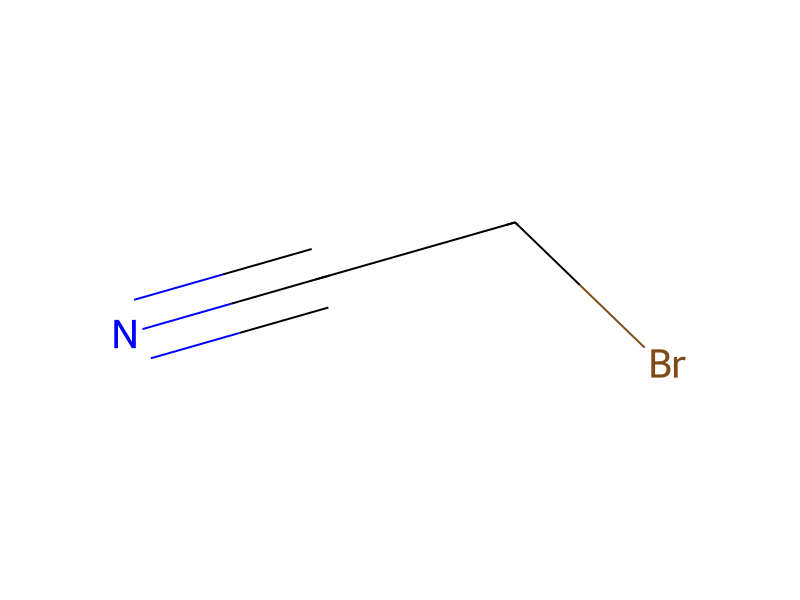
[Cl:1][C:2]1[CH:22]=[CH:21][C:5]([CH2:6][N:7]2[CH:12]=[C:11]([C:13]3[CH:18]=[CH:17][C:16]([OH:19])=[CH:15][CH:14]=3)[CH:10]=[CH:9][C:8]2=[O:20])=[C:4]([F:23])[CH:3]=1.C([O-])([O-])=O.[K+].[K+].Br[CH2:31][C:32]#[N:33]>C(#N)C>[Cl:1][C:2]1[CH:22]=[CH:21][C:5]([CH2:6][N:7]2[C:8](=[O:20])[CH:9]=[CH:10][C:11]([C:13]3[CH:18]=[CH:17][C:16]([O:19][CH2:31][C:32]#[N:33])=[CH:15][CH:14]=3)=[CH:12]2)=[C:4]([F:23])[CH:3]=1According to Scheme 14 Method A: A suspension of 1-(4-chloro-2-fluorobenzyl)-5-(4-hydroxyphenyl)pyridin-2(1H)-one (1 eq, 1.21 mmol, 0.40 g), K2CO3 (10 eq, 12.1 mmol, 1.68 g) and 2-bromoacetonitrile (1 eq, 1.21 mmol, 0.15 g) in acetonitrile (10 mL) was heated in a microwave at 180° C. during 5 min. The reaction mixture was filtered, the filtrate was concentrated and the resulting crude residue was dissolved in CH2Cl2. The organic phase washed with water, dried over MgSO4, filtered and evaporated. The crude oil was purified by flash chromatography over silica gel (AIT Flashsmart prepacked column 25 g SiO2) using CH2Cl2/MeOH 98/2 as eluent followed by trituration in acetonitrile to afford 2-(4-(1-(4-chloro-2-fluorobenzyl)-6-oxo-1,6-dihydropyridin-3-yl)phenoxy)acetonitrile (0.51 mmol, 0.19 g, 42%) as a white solid.