Adamantane → 1-Ethynyladamantane
반응식

[CH:1]12[CH2:10][CH:5]3[CH2:6][CH:7]([CH2:9][CH:3]([CH2:4]3)[CH2:2]1)[CH2:8]2.[CH2:11]1C2C3C4C[CH:12]1CC1C4CC(CC12)C3>>[C:11]([C:1]12[CH2:10][CH:5]3[CH2:6][CH:7]([CH2:9][CH:3]([CH2:4]3)[CH2:2]1)[CH2:8]2)#[CH:12]참가 물질
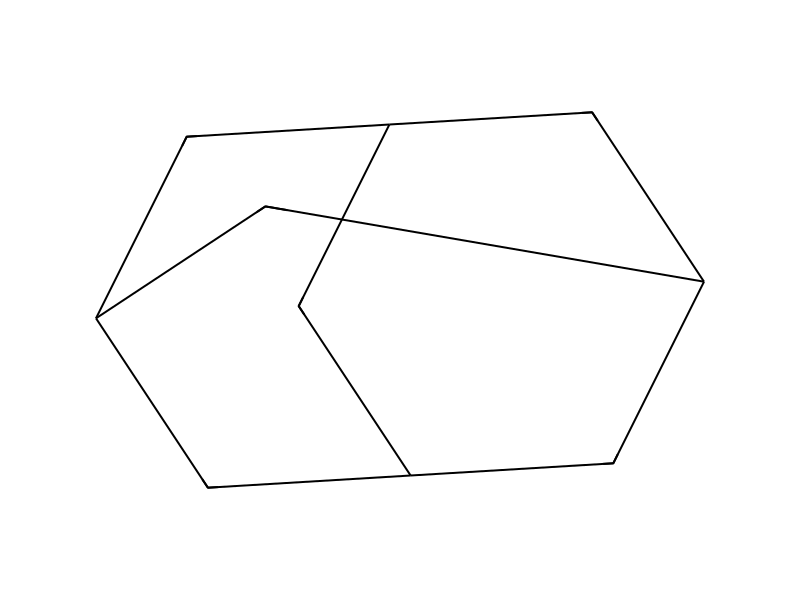


실험 절차
The aluminum bromide catalyzed reaction of 1-bromodiamantane (see Gund, T.M.; Schleyer, P.v.R. Tetrahedron Lett. 1971, 1583) with vinyl bromide in methylene chloride followed by dehydrohalogenation of the adduct with potassium t-butoxide in DMSO gave a mixture of five components. This mixture was separated by column chromatography and components were identified as diamantane (5%), 1-(2-bromovinyl)diamantane (8%), 1-ethynyldiamantane (50%), 4-(2-bromovinyl)-9-ethynyldiamantane (9%), and 4,9-diethynyl-diamantane (30%). The formation of 2-bromovinyl compounds results from incomplete dehydrohalogenation, and indicates that the elimination is slower than that observed for the adamantane system. The presence of diamantane and 4,9-diethynyl derivatives indicates the facile disproportionation chemistry in this system. In 1-ethynyldiamantane the ethynyl group is on the girdle, whereas in the case of the 4,9- disubstituted derivative, the ethynyl groups are on the epical positions. Although reaction condition were not found to give pure 1-ethynyldiamantane (similar difficulty was encountered with 1-ethynyladamantane), yields were improved to greater than 55% by the use of ferric chloride as the catalyst and hexane/methylene chloride as the solvent.
후처리
- customAlthough reaction condition
출처 및 근거
- ORD 기록
- ord-b998116ba537468ba6b1cda52924dfdb
- 출처 데이터셋
- uspto-grants-1991_05
- 특허 번호
- US05017734
반응 노트
불러오는 중…