홈MCP워크벤치Skills
홈워크벤치알림마이페이지
llms.txt · MCP 가이드개인정보처리방침 · 이용약관 · 지원v1.8.3
  1. 홈
  2. /반응

Cesium carbonate → 1,1-Dimethylethyl 1-(2,6-dimethyl-3-pyridinyl)-3-methyl-2-oxo-4-imidazolidinecarboxylate

HRID 2081008
인쇄

반응식

HRID 2081008 반응식
[CH3:1][N:2]1[CH:6]([C:7]([O:9][C:10]([CH3:13])([CH3:12])[CH3:11])=[O:8])[CH2:5][NH:4][C:3]1=[O:14].Br[C:16]1[C:17]([CH3:23])=[N:18][C:19]([CH3:22])=[CH:20][CH:21]=1.C(=O)([O-])[O-].[Cs+].[Cs+].CC1(C)C2C(=C(P(C3C=CC=CC=3)C3C=CC=CC=3)C=CC=2)OC2C(P(C3C=CC=CC=3)C3C=CC=CC=3)=CC=CC1=2>O1CCOCC1.O.C1C=CC(/C=C/C(/C=C/C2C=CC=CC=2)=O)=CC=1.C1C=CC(/C=C/C(/C=C/C2C=CC=CC=2)=O)=CC=1.C1C=CC(/C=C/C(/C=C/C2C=CC=CC=2)=O)=CC=1.[Pd].[Pd]>[CH3:23][C:17]1[C:16]([N:4]2[CH2:5][CH:6]([C:7]([O:9][C:10]([CH3:11])([CH3:13])[CH3:12])=[O:8])[N:2]([CH3:1])[C:3]2=[O:14])=[CH:21][CH:20]=[C:19]([CH3:22])[N:18]=1
참가 물질실험 절차후처리출처 및 근거반응 노트

참가 물질

8

반응물 4

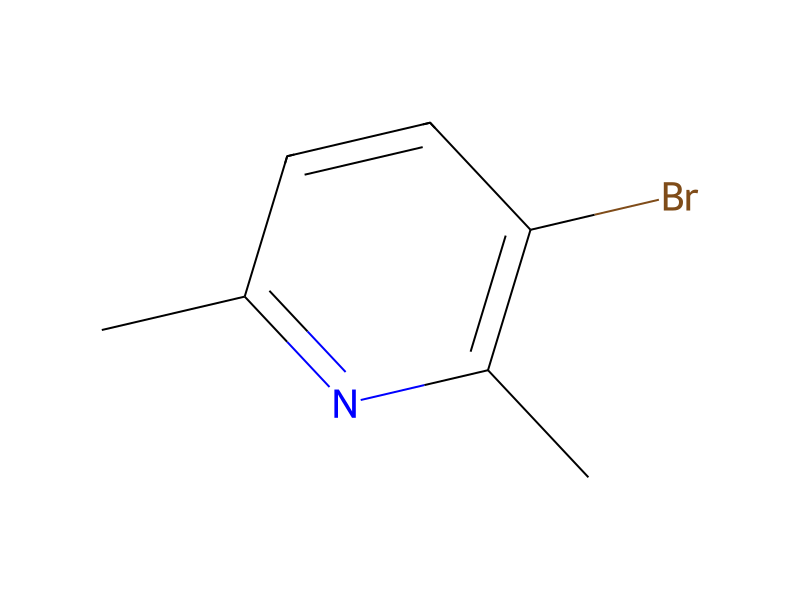
HCID 10796Cesium carbonateHCID 6039713-Bromo-2,6-dimethylpyridineHCID 6360441,1'-(9,9-Dimethyl-9H-xanthene-4,5-diyl)bis(1,1-diphenylphosphine)HCID 671035641,1-Dimethylethyl 3-methyl-2-oxo-4-imidazolidinecarboxylate

생성물 1

HCID 671036641,1-Dimethylethyl 1-(2,6-dimethyl-3-pyridinyl)-3-methyl-2-oxo-4-imidazolidinecarboxylate수율 54%

시약·촉매·용매 3

HCID 9811564Bis(dibenzylideneacetone)palladium촉매HCID 962Water용매HCID 312751,4-Dioxane용매

실험 절차

A solution of 1,1-dimethylethyl 3-methyl-2-oxo-4-imidazolidinecarboxylate (600 mg, 3.00 mmol) (prepared as described in step (iii) of Example 13, starting from (4S)-2-oxo-3-{[(phenylmethyl)oxy]carbonyl}-4-imidazolidinecarboxylic acid) and 3-bromo-2,6-dimethylpyridine (557 mg, 3.00 mmol) in 1,4-dioxane (20 ml) was treated with cesium carbonate (1464 mg, 4.49 mmol), Xantphos™ (130 mg, 0.225 mmol) and tris(dibenzylideneacetone)dipalladium(0) (68.6 mg, 0.075 mmol) and the mixture was heated at reflux under argon for 3 hours. After cooling to room temperature, the reaction mixture was diluted with water and extracted with ethyl acetate. The organic layers were combined, washed with water and brine and evaporated in vacuo. The residue was purified by silica gel chromatography eluting with 0-10% methanol in dichloromethane. The residue was dissolved in methanol and applied to a SCX ion exchange cartridge and washed with methanol and then 2M ammonia in methanol. The basic fractions were combined and evaporated to give 1,1-dimethylethyl 1-(2,6-dimethyl-3-pyridinyl)-3-methyl-2-oxo-4-imidazolidinecarboxylate (493 mg, 54%). LC/MS [M+H]+=306. (ii) A solution of 1,1-dimethylethyl 1-(2,6-dimethyl-3-pyridinyl)-3-methyl-2-oxo-4-imidazolidinecarboxylate (0.489 g, 1.6 mmol) in TFA/DCM (1:2, 9 ml) was stirred at room temperature for 16 hours. The solution was evaporated and the residue was co-evaporated with toluene and dried to give crude 1-(2,6-dimethyl-3-pyridinyl)-3-methyl-2-oxo-4-imidazolidinecarboxylic acid TFA salt, (assume ˜1.6 mmol) which was used in the next step. LC/MS [M+H]+=250.


후처리

  1. temperaturethe mixture was heated
  2. temperatureat reflux under argon for 3 hours
  3. extractionextracted with ethyl acetate
  4. washwashed with water and brine
  5. customevaporated in vacuo
  6. customThe residue was purified by silica gel chromatography
  7. washeluting with 0-10% methanol in dichloromethane
  8. dissolutionThe residue was dissolved in methanol
  9. washwashed with methanol
  10. customevaporated

출처 및 근거

ORD 기록
ord-55a534d5504e40a3a987d3bd49ff18c6
출처 데이터셋
uspto-grants-2011_04
DOI
10.6084/m9.figshare.5104873.v1
특허 번호
US07932282B2

반응 노트

이 페이지에서참가 물질실험 절차후처리출처 및 근거반응 노트