4-Nitrophenyl chloroformate → 3-[5-(2-Fluoro-phenyl)-pyridin-2-yloxy]-azetidine-1-carboxylic acid 4-nitro-phenyl ester
HRID 2097599
반응식

Cl[C:2]([O:4][C:5]1[CH:10]=[CH:9][C:8]([N+:11]([O-:13])=[O:12])=[CH:7][CH:6]=1)=[O:3].C([N:27]1[CH2:30][CH:29]([O:31][C:32]2[CH:37]=[CH:36][C:35]([C:38]3[CH:43]=[CH:42][CH:41]=[CH:40][C:39]=3[F:44])=[CH:34][N:33]=2)[CH2:28]1)(C1C=CC=CC=1)C1C=CC=CC=1>ClCCl>[N+:11]([C:8]1[CH:9]=[CH:10][C:5]([O:4][C:2]([N:27]2[CH2:30][CH:29]([O:31][C:32]3[CH:37]=[CH:36][C:35]([C:38]4[CH:43]=[CH:42][CH:41]=[CH:40][C:39]=4[F:44])=[CH:34][N:33]=3)[CH2:28]2)=[O:3])=[CH:6][CH:7]=1)([O-:13])=[O:12]참가 물질
4
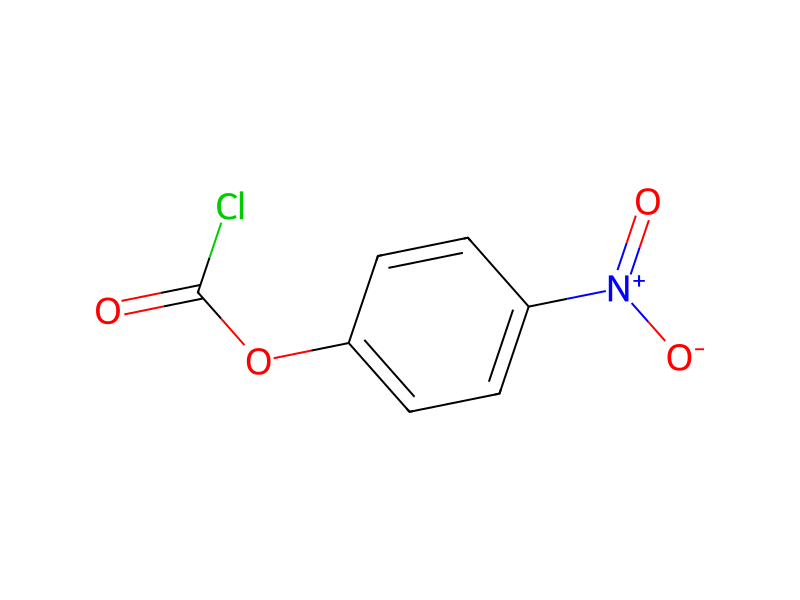



실험 절차
4-nitrophenyl chloroformate (734 mg g, 3.64 mmol) was added to a stirred solution of 2-(1-Benzhydryl-azetidin-3-yloxy)-5-(2-fluoro-phenyl)-pyridine (996 mg, 2.43 mol) in dichloromethane (25 mL) at ambient temperature. The resulting solution was stirred at ambient temperature for 18 hr, diluted with dichloromethane (150 mL) and washed sequentially with sat. aqueous sodium hydrogen carbonate solution (3×150 mL) then sat. sodium chloride solution (150 mL). The organic phase was dried over magnesium sulphate and filtered. Filtrate solvents were removed in vacuo and the residue was purified by trituration with Methyl tertiary butyl ether (25 mL) to give after filtration a yellow solid (786 mg, 79%).