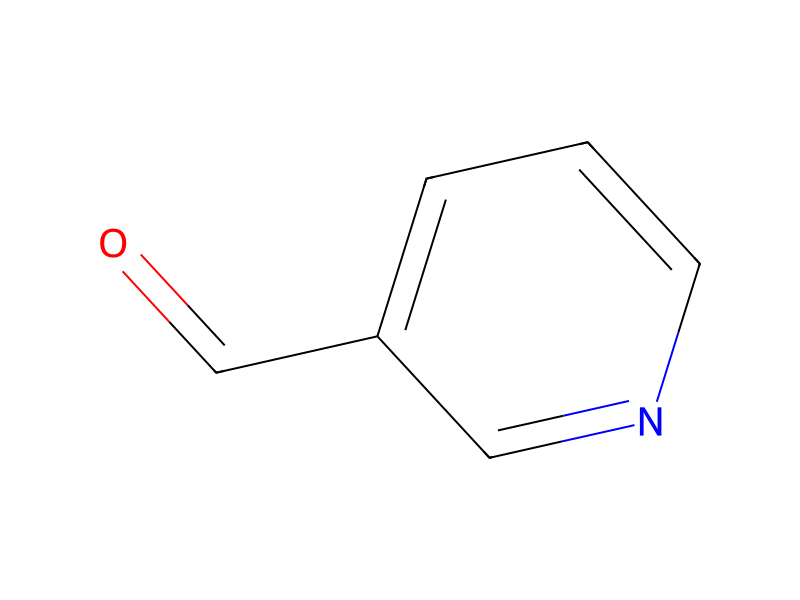
A solution of sodium acetate trihydrate (5.8 g, 0.04 m), 3-pyridinecarboxaldehyde (2.3 g., 0.02 m), p-methoxyphenylglyoxal monohydrate (3.92 g., 0.02 m), water (20 ml.), concentrated aqueous ammonia (25 ml.), and methanol (75 ml.) is allowed to stand at room temperature overnight. The solution is concentrated to dryness under reduced pressure (20 mm) over steam, treated with saturated Na2CO3 (100 ml.) and extracted with chloroform (3 × 100 ml.). The organic layer is dried over Na2SO4, filtered and concentrated to dryness. The residue is chromatographed on silica gel (300 ml.) and the product eluted with 3-5% MeOH/CHCl3. The material is crystallized from acetonitrile to give 2.3 g. of 4-p-methoxyphenyl)-2-(3-pyridyl)imidazole of m.p. 184-186.