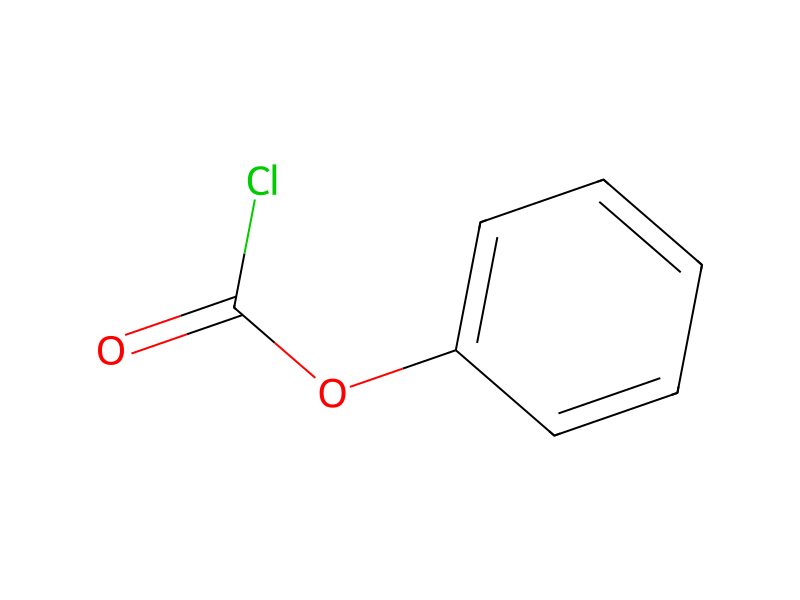
[Br:1][C:2]1[S:3][C:4]([CH2:8][O:9][C:10]2[CH:19]=[CH:18][C:13]([C:14]([NH:16][OH:17])=[NH:15])=[C:12]([Cl:20])[CH:11]=2)=[C:5]([CH3:7])[N:6]=1.N1C=CC=CC=1.[C:27]1([O:33]C(Cl)=O)C=CC=CC=1.N12CCCN=C1CCCCC2>ClCCl.C(#N)C>[Br:1][C:2]1[S:3][C:4]([CH2:8][O:9][C:10]2[CH:19]=[CH:18][C:13]([C:14]3[NH:16][O:17][C:27](=[O:33])[N:15]=3)=[C:12]([Cl:20])[CH:11]=2)=[C:5]([CH3:7])[N:6]=14-(2-Bromo-4-methyl-thiazol-5-ylmethoxy)-2-chloro-N-hydroxy-benzamidine (199 mg, 0.5 mmol) was dissolved in 6 ml dichloromethane. Pyridine (55 mg, 0.7 mmol) and phenylchloroformate (108 mg, 0.7 mmol) were added and the mixture stirred at room temperature for ten minutes. The mixture was diluted by the addition of 25 ml acetonitrile and 0.4 ml 1,8-Diazabicyclo[5.4.0]undec-7-ene were added. The mixture was stirred at room temperature for 10 minutes. The mixture was evaporated in vacuo and the resulting crude material was purified by reversed phase HPLC to obtain 142 mg 3-[4-(2-Bromo-4-methyl-thiazol-5-ylmethoxy)-2-chloro-phenyl]-2H-[1,2,4]oxadiazol-5-one as an amorphous lyophilisate.