반응식

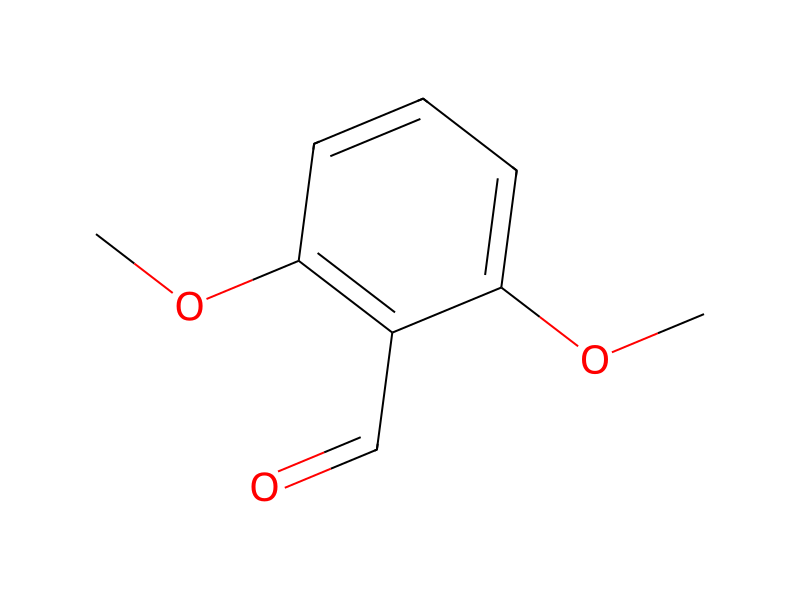
[CH3:1][O:2][C:3]1[CH:10]=[CH:9][CH:8]=[C:7]([O:11][CH3:12])[C:4]=1[CH:5]=O.[N+:13]([CH3:16])([O-:15])=[O:14]>>[CH3:1][O:2][C:3]1[CH:10]=[CH:9][CH:8]=[C:7]([O:11][CH3:12])[C:4]=1[CH2:5][CH2:16][NH2:13].[CH3:1][O:2][C:3]1[CH:10]=[CH:9][CH:8]=[C:7]([O:11][CH3:12])[C:4]=1[CH:5]=[CH:16][N+:13]([O-:15])=[O:14]참가 물질



실험 절차
The starting material 2,6-dimethoxy-phenethylamine was prepared from 2,6-dimethoxy-benzaldehyde. Reaction with nitromethane according to the procedure described in Vogel, Textbook of Practical Organic Chemistry, p. 176 (Longman 1978, 4th Ed.) yielded 2,6-dimethoxy-β-nitrostyrene. This comound (1.1 g, 5.3 mmole) was dissolved in diethyl ether/tetrahydrofuran (2:1, 200 ml) and lithium aluminium hydride (0.5 g, 13 mmol) was added in small portions. The mixture was refluxed for 120 minutes and then treated with 0.6 ml H2O, 0.6 ml 15% NaOH (aq) and 1.8 ml H2O. The mixture was filtered and purified by acid-base partitioning (NH4OH (aq) HCl dil. (aq)) and evaporated. The crude product 2,6-dimethoxyphenethylamine was pure enough to be used directly in the following reaction where it was condensed with the product of Example 103, in a manner analogous to Example 105, to give the titled product. 1H-NMR (DMSO-d6) δ 2.9 (t, PhCH2, 2H), 3,7 (q, CH2N, 2H), 3.8 (s, OCH3, 6H), 6.7 (d, o, 2H), 7.1 (d, thiazole, 1H), 7.2 (t, p, 1H), 7.3 (d, thiazole, 1H)).
출처 및 근거
- ORD 기록
- ord-513d13826dda406d96657839d7b1b0d8
- 출처 데이터셋
- uspto-grants-1997_08
- 특허 번호
- US05658907
연결된 노트
불러오는 중…