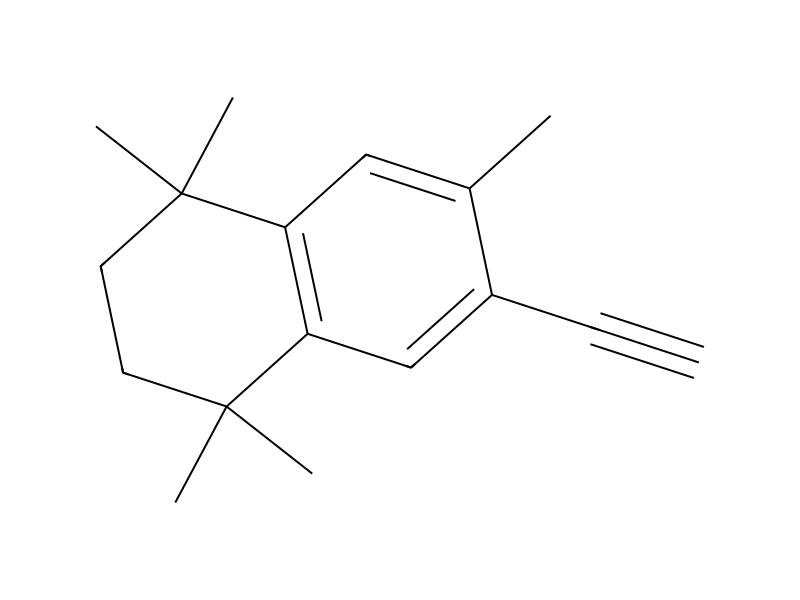
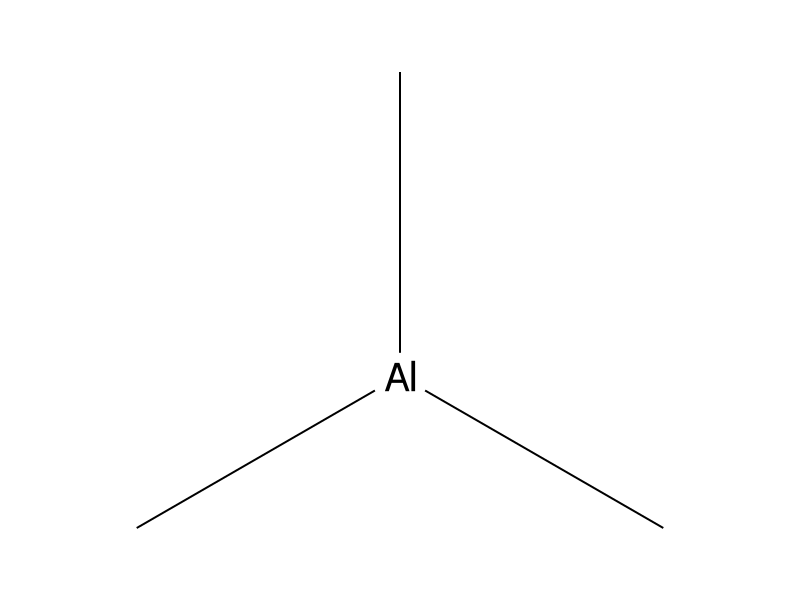
It should be noted in connection with Reaction Schemes 1, 2 and 3 that in all of these reaction schemes heterocycle derivatives corresponding respectively to Formula 7, 11 and 15 can be employed where in the A-B' substituent A is (CH2)n, n is 0, and B' is hydrogen. A carboxylic acid group is then introduced into the molecule, after coupling with the tetrahydronaphthalene moiety, by reaction with strong base (such as n-butyl lithium) and carbon dioxide or ethyl chloroformate. Reaction Scheme 4 illustrates specifically the synthesis of Compound 3 and Compound 4 of the present application. In accordance with this scheme (5,6,7,8-tetrahydro-3,5,5,8,8-pentamethylnaphthalen-2-yl)acetylene (Compound 10) is reacted with trimethylaluminum in the presence zirconocene dichloride. The resulting "carboaluminated adduct" (not shown in Scheme 4) is reacted in the presence of tetrakis(triphenylphosphine)palladium (Pd(PPh3)4) catalyst, with 1-(N,N-dimethylsulfamoyl)-4-iodoimidazole (Compound 11) which is obtained by iodination from 1-(N,N-dimethylsulfamoyl)imidazole. The latter compound can be obtained in accordance with the chemical literature: Chadwick et al. J. Chem. Soc., Perkin Trans. I 1984, 481-486. The result of the coupling reaction between between the carboaluminated adduct derived from Compound 10 and Compound 11 is (E)-4-[2-(5,6,7,8-tetrahydro-3,5,5,8,8-pentamethylnaphthalen-2-yl)propen-1-yl]-1-(N,N-dimethylsulfamoyl)imidazole (Compound 12). The carboxylic acid ethyl ester moiety is introduced into the molecule by reacting the anion of Compound 12 generated with strong base such as n-butyl lithium, with ethyl chloroformate, to yield ethyl (E)-4-[2-(5,6,7,8-tetrahydro- 3,5,5,8,8-pentamethylnaphthalen-2-yl)propen-1-yl]-1-(N,N-dimethylsulfamoyl)-2-imidazolecarboxylate (Compound 4). The dimethylsulfamoyl group is removed from the imidazole nitrogen by treatment with acid, to yield ethyl (E)-4-[2-(5,6,7,8-tetrahydro-3,5,5,8,8-pentamethylnaphthalen-2-yl)propen-1-yl]-2-imidazolecarboxylate (Compound 3). ##STR10##