홈MCP워크벤치Skills
홈워크벤치알림마이페이지
llms.txt · MCP 가이드개인정보처리방침 · 이용약관 · 지원v1.8.3
  1. 홈
  2. /반응

Ethyl chloroformate → ethyl (E)-4-[2-(5,6,7,8-tetrahydro-3,5,5,8,8-pentamethylnaphthalen-2-yl)propen-1-yl]-1-(N,N-dimethylsulfamoyl)-2-imidazolecarboxylate

HRID 2259990
인쇄

반응식

HRID 2259990 반응식
CC1C(C#C)=CC2C(C)(C)CCC(C)(C)C=2C=1.CN(C)S(N1C=C(I)N=C1)(=O)=O.[CH3:30][C:31]1[C:32](/[C:45](/[CH3:58])=[CH:46]/[C:47]2[N:48]=[CH:49][N:50]([S:52](=[O:57])(=[O:56])[N:53]([CH3:55])[CH3:54])[CH:51]=2)=[CH:33][C:34]2[C:35]([CH3:44])([CH3:43])[CH2:36][CH2:37][C:38]([CH3:42])([CH3:41])[C:39]=2[CH:40]=1.C([Li])CCC.Cl[C:65]([O:67][CH2:68][CH3:69])=[O:66]>>[CH3:30][C:31]1[C:32](/[C:45](/[CH3:58])=[CH:46]/[C:47]2[N:48]=[C:49]([C:65]([O:67][CH2:68][CH3:69])=[O:66])[N:50]([S:52](=[O:56])(=[O:57])[N:53]([CH3:55])[CH3:54])[CH:51]=2)=[CH:33][C:34]2[C:35]([CH3:44])([CH3:43])[CH2:36][CH2:37][C:38]([CH3:41])([CH3:42])[C:39]=2[CH:40]=1
참가 물질실험 절차후처리출처 및 근거반응 노트

참가 물질

6

반응물 5

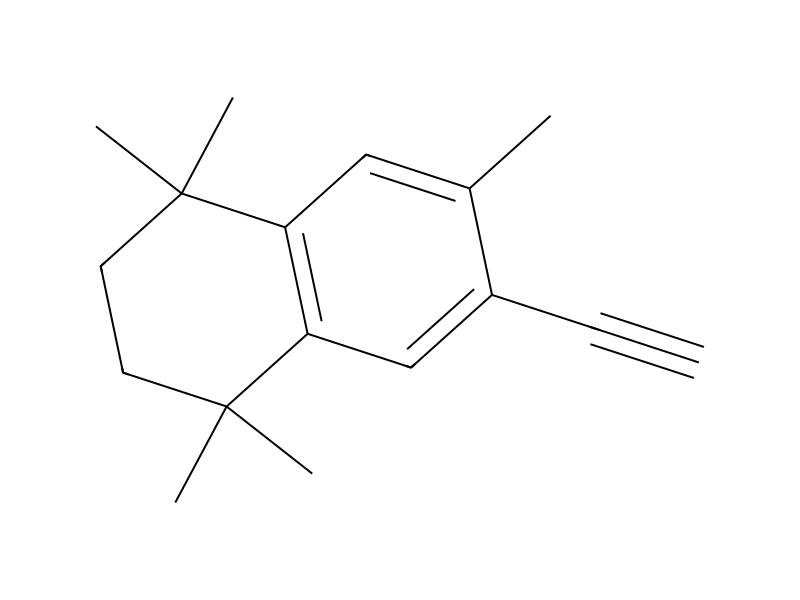
HCID 10928Ethyl chloroformateHCID 2773390N,N-Dimethyl 4-iodo-1H-imidazole-1-sulfonamideHCID 118063871,1,4,4,7-Pentamethyl-6-ethynyl-1,2,3,4-tetrahydronaphthaleneHCID 19002082(E)-4-[2-(5,6,7,8-tetrahydro-3,5,5,8,8-pentamethylnaphthalen-2-yl)propen-1-yl]-1-(N,N-dimethylsulfamoyl)imidazole3회HCID 178418339Butyllithium

생성물 1

HCID 86749151
ethyl (E)-4-[2-(5,6,7,8-tetrahydro-3,5,5,8,8-pentamethylnaphthalen-2-yl)propen-1-yl]-1-(N,N-dimethylsulfamoyl)-2-imidazolecarboxylate

실험 절차

It should be noted in connection with Reaction Schemes 1, 2 and 3 that in all of these reaction schemes heterocycle derivatives corresponding respectively to Formula 7, 11 and 15 can be employed where in the A-B' substituent A is (CH2)n, n is 0, and B' is hydrogen. A carboxylic acid group is then introduced into the molecule, after coupling with the tetrahydronaphthalene moiety, by reaction with strong base (such as n-butyl lithium) and carbon dioxide or ethyl chloroformate. Reaction Scheme 4 illustrates specifically the synthesis of Compound 3 and Compound 4 of the present application. In accordance with this scheme (5,6,7,8-tetrahydro-3,5,5,8,8-pentamethylnaphthalen-2-yl)acetylene (Compound 10) is reacted with trimethylaluminum in the presence zirconocene dichloride. The resulting "carboaluminated adduct" (not shown in Scheme 4) is reacted in the presence of tetrakis(triphenylphosphine)palladium (Pd(PPh3)4) catalyst, with 1-(N,N-dimethylsulfamoyl)-4-iodoimidazole (Compound 11) which is obtained by iodination from 1-(N,N-dimethylsulfamoyl)imidazole. The latter compound can be obtained in accordance with the chemical literature: Chadwick et al. J. Chem. Soc., Perkin Trans. I 1984, 481-486. The result of the coupling reaction between between the carboaluminated adduct derived from Compound 10 and Compound 11 is (E)-4-[2-(5,6,7,8-tetrahydro-3,5,5,8,8-pentamethylnaphthalen-2-yl)propen-1-yl]-1-(N,N-dimethylsulfamoyl)imidazole (Compound 12). The carboxylic acid ethyl ester moiety is introduced into the molecule by reacting the anion of Compound 12 generated with strong base such as n-butyl lithium, with ethyl chloroformate, to yield ethyl (E)-4-[2-(5,6,7,8-tetrahydro- 3,5,5,8,8-pentamethylnaphthalen-2-yl)propen-1-yl]-1-(N,N-dimethylsulfamoyl)-2-imidazolecarboxylate (Compound 4). The dimethylsulfamoyl group is removed from the imidazole nitrogen by treatment with acid, to yield ethyl (E)-4-[2-(5,6,7,8-tetrahydro-3,5,5,8,8-pentamethylnaphthalen-2-yl)propen-1-yl]-2-imidazolecarboxylate (Compound 3). ##STR10##

후처리

  1. customThe latter compound can be obtained in accordance with the chemical literature
  2. customThe result of the coupling reaction between between the carboaluminated adduct

출처 및 근거

ORD 기록
ord-fe4ff784d15c49e692da8f1084e9cdc3
출처 데이터셋
uspto-grants-1995_12
DOI
10.6084/m9.figshare.5104873.v1
특허 번호
US05475113

반응 노트

이 페이지에서참가 물질실험 절차후처리출처 및 근거반응 노트