반응식

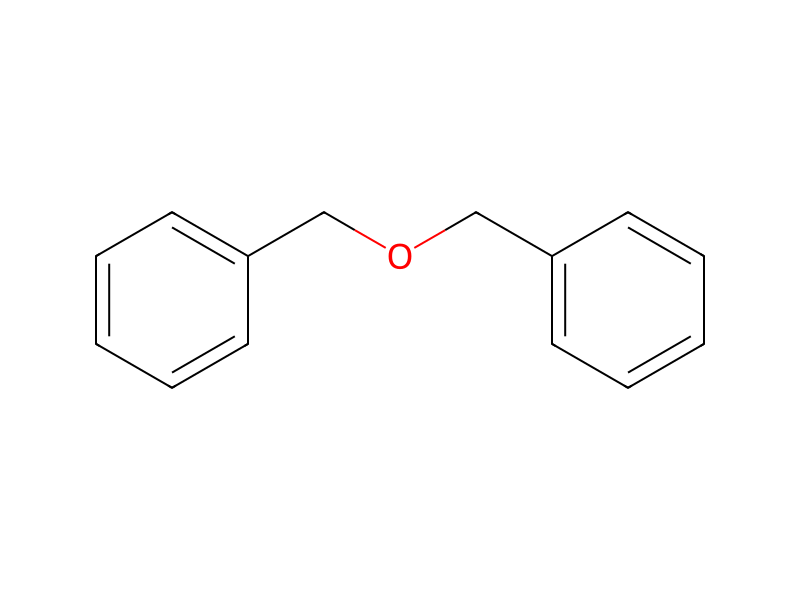
[Si]([O-])([O-])([O-])[O-].[Al+3].[Si]([O-])([O-])([O-])[O-].[Si]([O-])([O-])([O-])[O-].[Al+3].[Al+3].[Al+3].[CH2:20]([O:27][CH2:28][C:29]1[CH:34]=CC=C[CH:30]=1)[C:21]1[CH:26]=CC=C[CH:22]=1.OCC(C)(C)C=O>>[CH3:22][CH:21]([CH3:26])[CH2:20][O:27][CH2:28][CH:29]([CH3:34])[CH3:30]참가 물질


실험 절차
This isomerization reaction has been examined to a very large extent with regard to its mechanism and action of catalysts (J.Amer.Chem.Soc. 84, 3307 (1962)) and it was found that acidic catalysts are required for an isomerization and that of a great number of substances tested only silica gel and aluminum silicate in the form of pumice may practically be used as catalysts. But the activity and selectivity of these catalysts are not yet satisfactory from the economical point of view. Thus, the benzyl ether of hydroxypivalaldehyde can be prepared in the most favorable case with pumice with a conversion of 90 molar % and a selectivity of 83.3 molar %, i.e. a yield of 75 molar %. For the 2-methylpropyl ether, the yield with the same catalyst is 69 molar %, with a conversion of 84 molar % and a selectivity of 82.1 molar %, whereas the methyl ether is formed only in a yield of 38 molar %. When SiO2 is used as catalyst instead of pumice, the yield of the benzyl ether is even markedly lower, i.e. 46 molar %.
후처리
- customThis isomerization reaction
출처 및 근거
- ORD 기록
- ord-75bfd3df712047b6be3dc82b394e34ef
- 출처 데이터셋
- uspto-grants-1982_04
- 특허 번호
- US04324921
연결된 노트
불러오는 중…