홈MCP워크벤치Skills
홈워크벤치알림마이페이지
llms.txt · MCP 가이드개인정보처리방침 · 이용약관 · 지원v1.8.3
  1. 홈
  2. /반응

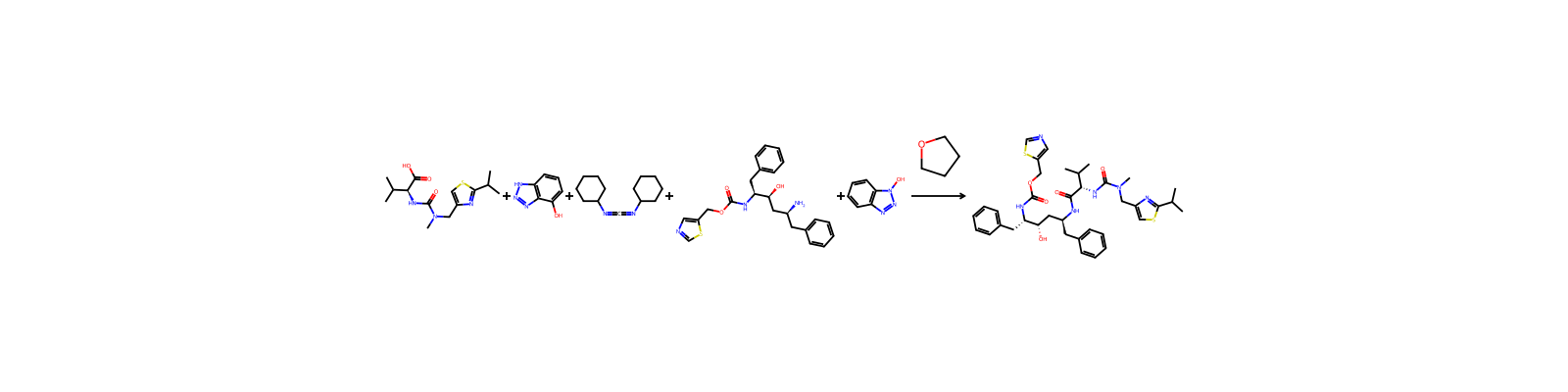
Dicyclohexylcarbodiimide → Ritonavir

HRID 235331
인쇄

반응식

HRID 235331 반응식
[CH3:1][N:2]([C:12]([NH:14][C@H:15]([C:19]([OH:21])=O)[CH:16]([CH3:18])[CH3:17])=[O:13])[CH2:3][C:4]1[N:5]=[C:6]([CH:9]([CH3:11])[CH3:10])[S:7][CH:8]=1.OC1C2N=NNC=2C=CC=1.C1(N=C=NC2CCCCC2)CCCCC1.[NH2:47][C@@H:48]([CH2:70][C:71]1[CH:76]=[CH:75][CH:74]=[CH:73][CH:72]=1)[CH2:49][C@H:50]([OH:69])[C@@H:51]([NH:59][C:60]([O:62][CH2:63][C:64]1[S:68][CH:67]=[N:66][CH:65]=1)=[O:61])[CH2:52][C:53]1[CH:58]=[CH:57][CH:56]=[CH:55][CH:54]=1.C1C=CC2N(O)N=NC=2C=1>C1COCC1>[CH3:1][N:2]([C:12]([NH:14][C@H:15]([C:19]([NH:47][C@@H:48]([CH2:70][C:71]1[CH:72]=[CH:73][CH:74]=[CH:75][CH:76]=1)[CH2:49][C@H:50]([OH:69])[C@@H:51]([NH:59][C:60]([O:62][CH2:63][C:64]1[S:68][CH:67]=[N:66][CH:65]=1)=[O:61])[CH2:52][C:53]1[CH:58]=[CH:57][CH:56]=[CH:55][CH:54]=1)=[O:21])[CH:16]([CH3:17])[CH3:18])=[O:13])[CH2:3][C:4]1[N:5]=[C:6]([CH:9]([CH3:10])[CH3:11])[S:7][CH:8]=1


참가 물질실험 절차후처리출처 및 근거반응 노트

참가 물질

7

반응물 5

HCID 10868DicyclohexylcarbodiimideHCID 757711-HydroxybenzotriazoleHCID 9818282UreidovalineHCID 111019781,3-Thiazol-5-ylmethyl N-((1S,2S,4S)-4-amino-1-benzyl-2-hydroxy-5-phenylpentyl)carbamateHCID 178418300HCID 178418300, 화합물

생성물 1

HCID 392622
Ritonavir
수율 99.5%

시약·촉매·용매 1

HCID 8028Tetrahydrofuran용매2회

실험 절차

N-((N-Methyl-N-((2-isopropyl-4-thiazolyl)methyl)amino)carbonyl)-L-valine (4.13 g, 13.18 mmole) and hydroxybenztriazole (2.23 g, 16.48 mmoles) were dissolved in 70 mL THF and then dicyclohexyl-carbodiimide(2.71 g, 13.18 mmoles) was added in one portion to the stirred solution under nitrogen atmosphere. This mixture was stirred for 4 h at room temperature and then filtered to remove dicyclohexylurea precipitate. The product of Example 69B (5.1 g, 11.99 mmoles) was dissolved in 100 mL THF under nitrogen atmosphere. To this stirred solution was added the filtrate of HOBT-active ester and the resulting solution was stirred at room temperature for 4 h, and the solvent removed via rotary evaporation. The residue was dissolved in 150 mL ethyl acetate and washed with 2×100 mL 1N NaOH, 100 mL brine, 100 mL of 1% w/w aqueous KHSO4 and the solvent was removed by rotary evaporation to afford a residue. The residue was dissolved in 175 mL 1N HCL, and the solution filtered to remove the small quantity of dicyclohexylurea. The flitrate solution was added to 175 mL ethyl acetate and the two phase mixture rapidly mixed. The pH of this rapidly stirred mixture was adjusted to pH=7 by dropwise addition of cold 3N NaOH. The organic layer was isolated, washed with 100 mL brine, dried over Na2SO4, filtered, and the solvent was removed to afford 8.6 g of a colorless foam. This material was crystallized from 42 mL EtOAc and 21 mL hexane to give 7.85 g of the desired product as a white solid. mp=122°-123° C. CIMS m/z 721 (M+H)+.

후처리

  1. filtrationfiltered
  2. customto remove dicyclohexylurea precipitate
  3. stirringthe resulting solution was stirred at room temperature for 4 h
  4. customthe solvent removed via rotary evaporation
  5. dissolutionThe residue was dissolved in 150 mL ethyl acetate
  6. washwashed with 2×100 mL 1N NaOH, 100 mL brine, 100 mL of 1% w/w aqueous KHSO4
  7. customthe solvent was removed by rotary evaporation
  8. customto afford a residue
  9. dissolutionThe residue was dissolved in 175 mL 1N HCL
  10. filtrationthe solution filtered
  11. customto remove the small quantity of dicyclohexylurea
  12. additionThe flitrate solution was added to 175 mL ethyl acetate
  13. additionthe two phase mixture rapidly mixed
  14. additionThe pH of this rapidly stirred mixture was adjusted to pH=7 by dropwise addition of cold 3N NaOH
  15. customThe organic layer was isolated
  16. washwashed with 100 mL brine
  17. dry with materialdried over Na2SO4
  18. filtrationfiltered
  19. customthe solvent was removed

출처 및 근거

ORD 기록
ord-eb64ae594e064e0e8b569474fcfd05b4
출처 데이터셋
uspto-grants-1997_01
DOI
10.6084/m9.figshare.5104873.v1
특허 번호
US05597927

반응 노트

이 페이지에서참가 물질실험 절차후처리출처 및 근거반응 노트