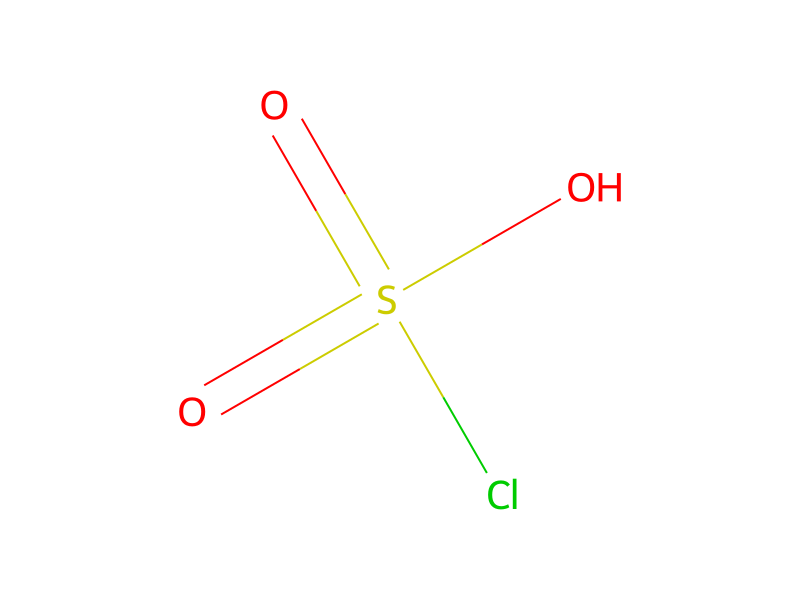
14.8 g (64.4 mmol) of 4-aminomethyl-7-methoxychroman hydrochloride are dissolved in 75 ml of pyridine and treated with cooling to 0° C. with 13.4 g of 2-methoxy-5-chlorobenzoyl chloride. The mixture is stirred for 1.5 hours at room temperature and for 1 hour at 60° C. The cooled reaction mixture is partitioned between water and methylene chloride. The aqueous phase is extracted three times with methylene chloride. The combined organic phases are washed with 2N hydrochloric acid, water and bicarbonate solution. After drying and evaporating the organic phase, an oil is obtained. 20 g of this oil are cooled to -20° C. 30 ml of precooled chlorosulfonic acid are added with stirring. The mixture is allowed to come to room temperature with shaking and a further 5 ml of chlorosulfonic acid are added. After stirring into ice water, the precipitate obtained is filtered off with suction and, after washing with a little cold water, introduced into a solution of 200 ml of acetone and 120 ml of concentrated ammonia cooled to -20° C. The mixture is allowed to warm to room temperature, and after standing overnight the solution is concentrated in vacuo. The residue is treated with concentrated hydrochloric acid with ice cooling. The precipitate obtained is filtered off with suction and recrystallized from glacial acetic acid/methanol. 4-(5-Chloro-2-methoxybenzamidomethyl)-6-sulfamoyl-7-methoxychroman is obtained in the form of colorless crystals of melting point 202° C.