반응식

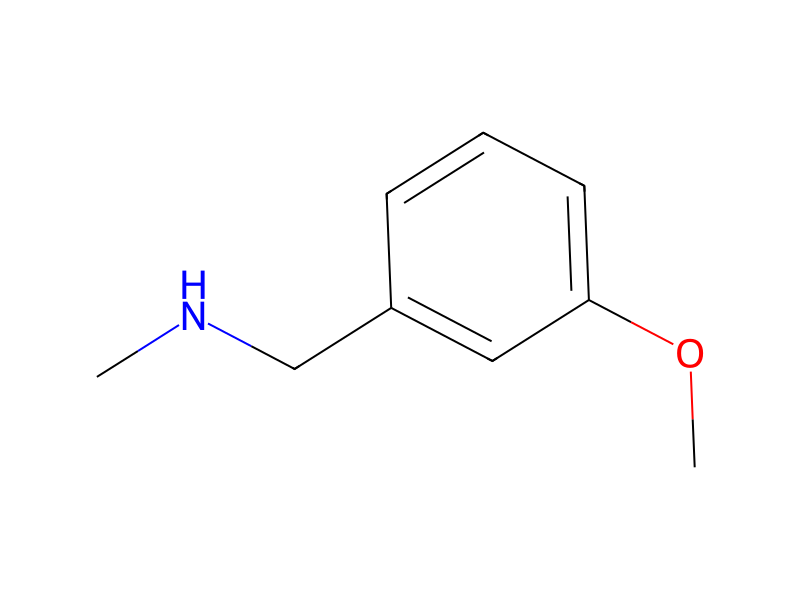
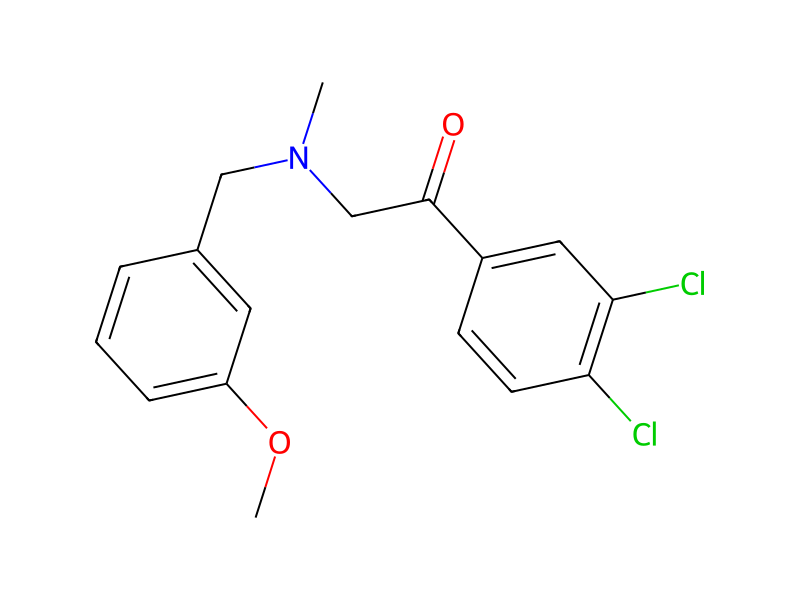
[CH3:1][O:2][C:3]1[CH:4]=[C:5]([CH2:9][NH:10][CH3:11])[CH:6]=[CH:7][CH:8]=1.[Cl:12][C:13]1[CH:14]=[C:15]([CH:20]=[CH:21][C:22]=1[Cl:23])[C:16](=[O:19])[CH2:17]Br>C(N(CC)CC)C>[Cl:12][C:13]1[CH:14]=[C:15]([C:16](=[O:19])[CH2:17][N:10]([CH2:9][C:5]2[CH:6]=[CH:7][CH:8]=[C:3]([O:2][CH3:1])[CH:4]=2)[CH3:11])[CH:20]=[CH:21][C:22]=1[Cl:23]참가 물질


실험 절차
1-(3-Methoxyphenyl)-N-methylmethanamine is reacted with 3,4-dichlorophenacyl bromide in the presence of triethylamine to give 1-(3,4-dichlorophenyl)-2-((3-methoxybenzyl)(methyl)amino)ethanone. Reduction of this ketone by sodium borohydride yields 1-(3,4-dichlorophenyl)-2-(3-methoxybenzyl)(methyl)amino)ethanol, which undergoes acid mediated cyclization to give 4-(3,4-dichlorophenyl)-7-methoxy-2-methyl-1,2,3,4-tetrahydroisoquinoline. This racemic tetraisoquinoline derivative can be separated via chiral HPLC or supercritical fluid chromatography (SFC) to give the single enantiomers. Alternatively, the chiral separation can be achieved by recrystallization using chiral acids such as di-p-toluoyl-D-tartaric acid or di-p-toluoyl-L-tartaric acid.
출처 및 근거
- ORD 기록
- ord-e7c290ae978d4013995c30099e892f86
- 출처 데이터셋
- uspto-grants-2014_08
- 특허 번호
- US08802696B2
연결된 노트
불러오는 중…