홈MCP워크벤치Skills
홈워크벤치알림마이페이지
llms.txt · MCP 가이드개인정보처리방침 · 이용약관 · 지원v1.8.3
  1. 홈
  2. /반응

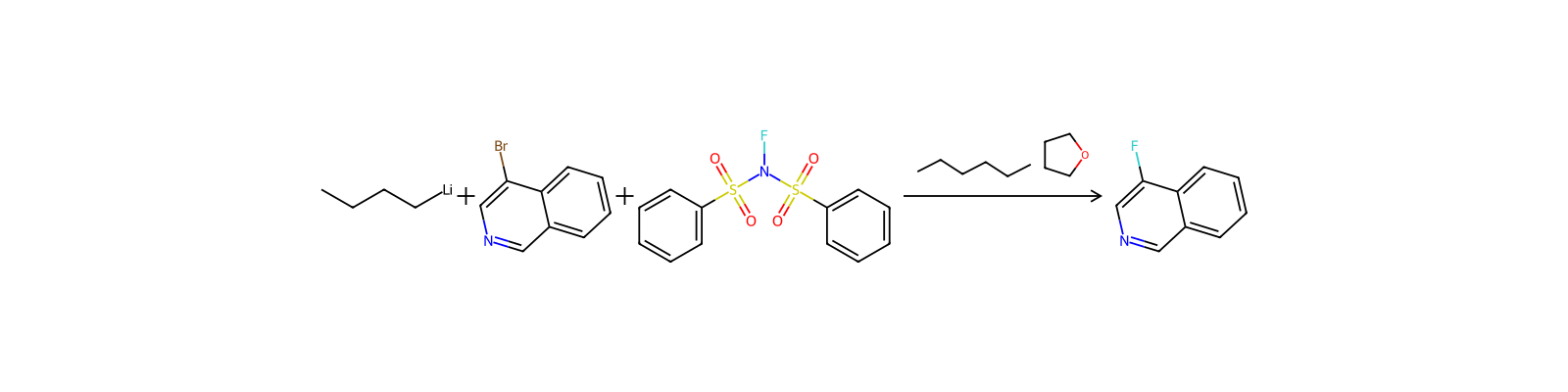
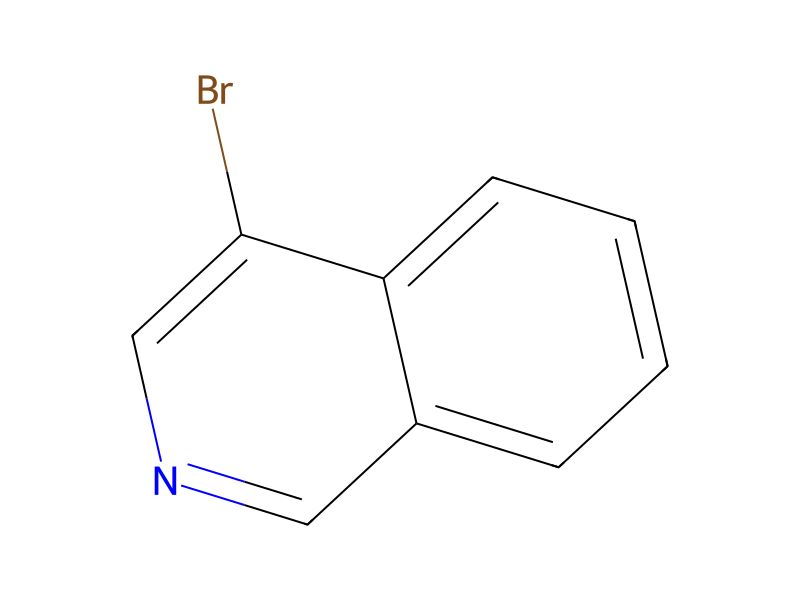
4-Bromoisoquinoline → 4-Fluoroisoquinoline

HRID 2425374
인쇄

반응식

HRID 2425374 반응식
C([Li])CCC.Br[C:7]1[C:16]2[C:11](=[CH:12][CH:13]=[CH:14][CH:15]=2)[CH:10]=[N:9][CH:8]=1.C1C=CC(S(N(S(C2C=CC=CC=2)(=O)=O)[F:27])(=O)=O)=CC=1>CCCCCC.O1CCCC1>[F:27][C:7]1[C:16]2[C:11](=[CH:12][CH:13]=[CH:14][CH:15]=2)[CH:10]=[N:9][CH:8]=1
참가 물질실험 절차후처리출처 및 근거반응 노트

참가 물질

6

반응물 3

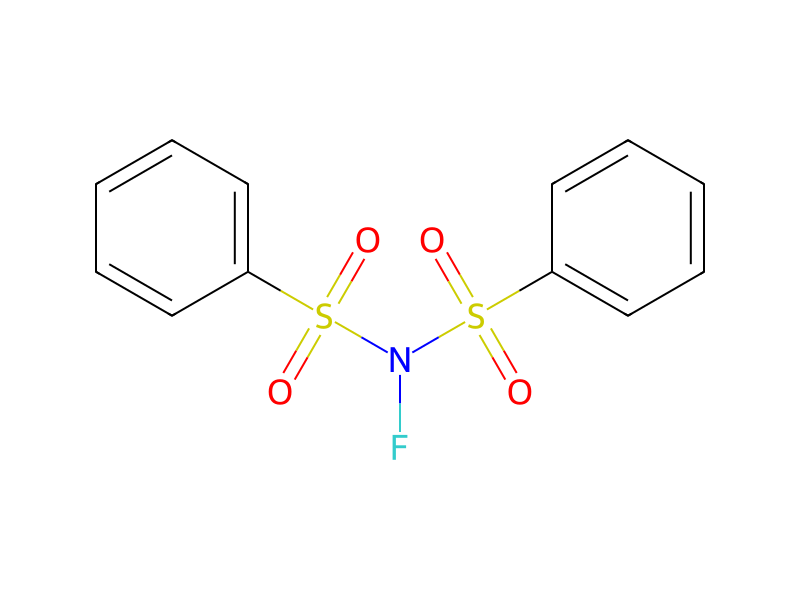
HCID 737434-BromoisoquinolineHCID 588007N-FluorobenzenesulfonimideHCID 178418339Butyllithium

생성물 1

HCID 6409734-Fluoroisoquinoline수율 56.6%

시약·촉매·용매 2

HCID 8028Tetrahydrofuran용매3회HCID 8058Hexane용매

실험 절차

A solution of n-butyllithium in n-hexane (1.58 M, 60.1 ml, Kanto Chemicals) was added with tetrahydrofuran (345 ml), and the mixture was sufficiently cooled on a dry ice-acetone bath. The mixture was added dropwise with a solution of 4-bromoisoquinoline (9.0 g, Tokyo Kasei Kogyo) in tetrahydrofuran (65 ml) over 1 hour so that the temperature of the reaction mixture should not exceed −65° C. The mixture was stirred at the same temperature for 30 minutes, and then added dropwise with a solution of N-fluorobenzenesulfonimide (30 g, Tokyo Kasei Kogyo) in tetrahydrofuran (100 ml) over 1 hour so that the temperature of the reaction mixture should not exceed −65° C. Subsequently, the mixture was stirred at the same temperature for 1 hour, then the cooling bath was removed, and the mixture was gradually warmed to room temperature. The reaction mixture was added with saturated aqueous sodium hydrogencarbonate (300 ml) and ethyl acetate (300 ml), and stirred at room temperature for 12 hours. The organic layer was separated, and the aqueous layer was extracted with ethyl acetate 3 times (200 ml for each time). The combined organic layer was washed with saturated brine (500 ml), and dried over anhydrous magnesium sulfate. The solvent was evaporated under reduced pressure, the residue was added with chloroform (250 ml), and the insoluble solids were removed by filtration. The solvent was evaporated under reduced pressure, and the residue was purified by silica gel chromatography (n-hexane:ethyl acetate=5:1) to obtain the title compound (3.6 g).
후처리

  1. temperaturethe mixture was sufficiently cooled on a dry ice-acetone bath
  2. customexceed −65° C
  3. customexceed −65° C
  4. stirringSubsequently, the mixture was stirred at the same temperature for 1 hour
  5. customthe cooling bath was removed
  6. additionThe reaction mixture was added with saturated aqueous sodium hydrogencarbonate (300 ml) and ethyl acetate (300 ml)
  7. stirringstirred at room temperature for 12 hours
  8. customThe organic layer was separated
  9. extractionthe aqueous layer was extracted with ethyl acetate 3 times (200 ml for each time)
  10. washThe combined organic layer was washed with saturated brine (500 ml)
  11. dry with materialdried over anhydrous magnesium sulfate
  12. customThe solvent was evaporated under reduced pressure
  13. additionthe residue was added with chloroform (250 ml)
  14. customthe insoluble solids were removed by filtration
  15. customThe solvent was evaporated under reduced pressure
  16. customthe residue was purified by silica gel chromatography (n-hexane:ethyl acetate=5:1)

출처 및 근거

ORD 기록
ord-8f6fd553fbe44b20b5a6b565cea8f75a
출처 데이터셋
uspto-grants-2011_06
DOI
10.6084/m9.figshare.5104873.v1
특허 번호
US07964613B2

반응 노트

이 페이지에서참가 물질실험 절차후처리출처 및 근거반응 노트