홈MCPSkills워크벤치OpenChem
홈워크벤치알림마이페이지
llms.txt · skill.md · MCP 가이드개인정보처리방침 · 이용약관 · 지원v1.8.5
  1. 홈
  2. /반응

Acetohydrazide → 3-methyl-6,7-dihydro-5H-pyrrolo[2,1-c][1,2,4]triazole-7-carboxylic acid

HRID 243671
인쇄

반응식

O=[C:2]1[CH:6]([C:7]([O:9]CC)=[O:8])[CH2:5][CH2:4][NH:3]1.F[B-](F)(F)F.C[O+](C)C.[C:21]([NH:24][NH2:25])(=O)[CH3:22]>ClCCl>[CH3:22][C:21]1[N:3]2[CH2:4][CH2:5][CH:6]([C:7]([OH:9])=[O:8])[C:2]2=[N:25][N:24]=1
참가 물질실험 절차후처리출처 및 근거반응 노트

참가 물질

5

반응물 3

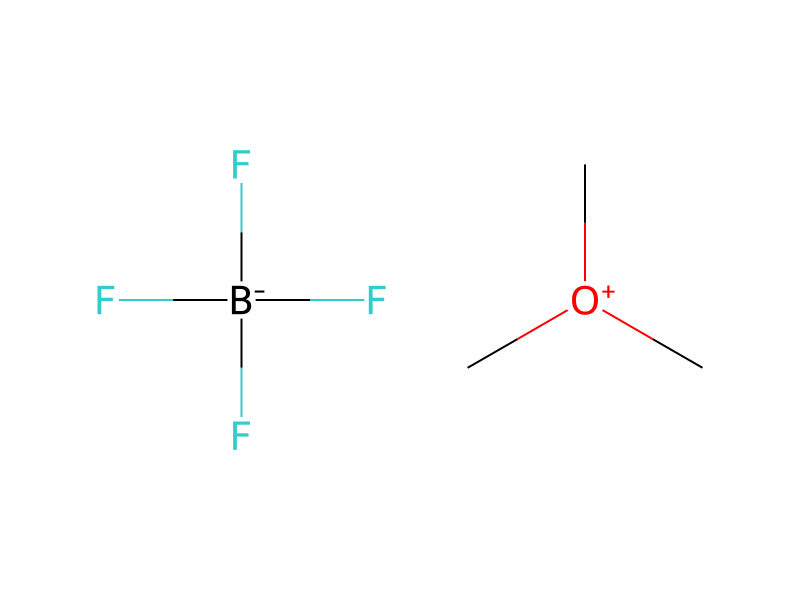
HCID 14039AcetohydrazideHCID 2735153Oxonium, trimethyl-, tetrafluoroborate(1-) (1:1)HCID 12699000Ethyl 2-oxopyrrolidine-3-carboxylate

생성물 1

HCID 579074853-methyl-6,7-dihydro-5H-pyrrolo[2,1-c][1,2,4]triazole-7-carboxylic acid수율 17.1%

시약·촉매·용매 1

HCID 6344Dichloromethane용매

실험 절차

Dissolved commercially available ethyl 2-oxopyrrolidine-3-carboxylate (2.50 g, 15.91 mmol) in 30 mL dichloromethane in 50 mL round bottom flask. To this solution was added trimethyloxonium tetrafluoroborate (2.59 g, 17.5 mmol) as a solid and rinsed with 20 mL dichloromethane. The resulting mixture was stirred at room temperature for two h and LC/MS indicated that the intermediate methyl 5-methoxy-3,4-dihydro-2H-pyrrole-4-carboxylate had formed. At this point, acetohydrazide (1.18 g, 15.91 mmol) was introduced as a solid to the mixture and the resulting solution was stirred at room temperature for 3 h. The solution was then concentrated under vacuum to remove all dichloromethane and the residue was then taken up in 100 mL n-butanol which was heated to reflux in an oil bath set at 120° C. overnight. The solution was cooled to room temperature and concentrated under vacuum. The residue was purified via sixteen 1500 μm silica gel preparative plates eluting with 90:10 dichloromethane:methanol solvent system. The product was extracted from the silica gel using 85:15 dichloromethane:methanol which afforded the title compound (454 mg, 11%). 1H NMR (500 MHz DMSO-d6) δ: 4.16-4.06 (m, 1H), 4.00-3.88 (m, 1H), 2.85-2.78 (m, 1H), 2.29 (s, 3H), 1.55 (dt, J=6.7, 13.9 Hz, 2H), 1.32 (dt, J=6.7, 14.0 Hz, 2H), 0.88 (t, J=7.5 Hz, 3H). LC-MS: m/z (ES)=196 (MH)+.

후처리

  1. washrinsed with 20 mL dichloromethane
  2. customhad formed
  3. stirringthe resulting solution was stirred at room temperature for 3 h
  4. concentrationThe solution was then concentrated under vacuum
  5. customto remove all dichloromethane
  6. temperaturewas heated
  7. temperatureto reflux in an oil bath
  8. temperatureThe solution was cooled to room temperature
  9. concentrationconcentrated under vacuum
  10. customThe residue was purified via sixteen 1500 μm silica gel preparative plates
  11. washeluting with 90:10 dichloromethane
  12. extractionThe product was extracted from the silica gel using 85:15 dichloromethane

출처 및 근거

ORD 기록
ord-cea3dfcac84345a78be7f1bce7971b4c
출처 데이터셋
uspto-grants-2014_02
DOI
10.6084/m9.figshare.5104873.v1
특허 번호
US08653260B2

반응 노트

이 페이지에서참가 물질실험 절차후처리출처 및 근거반응 노트