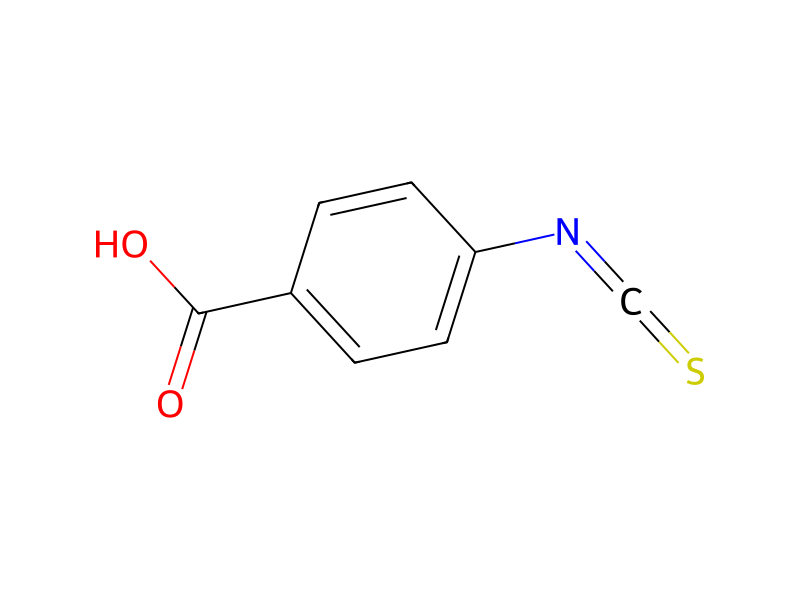
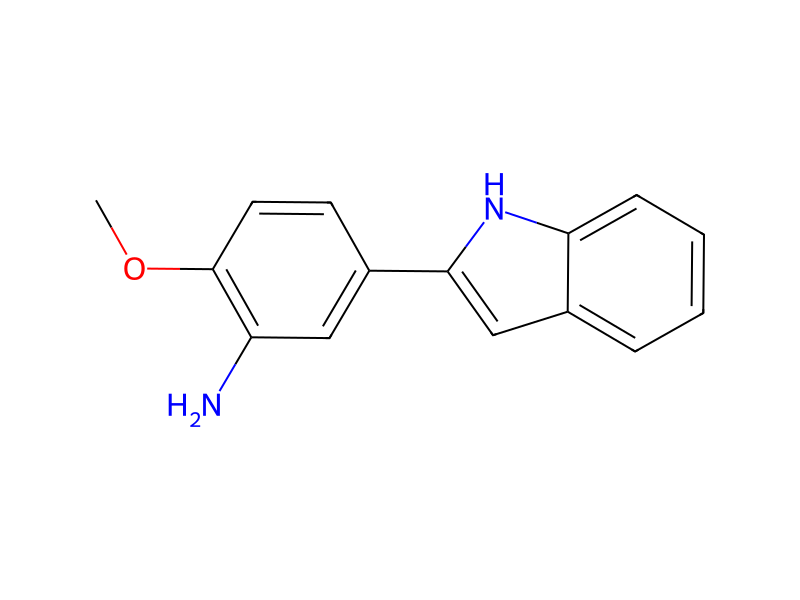
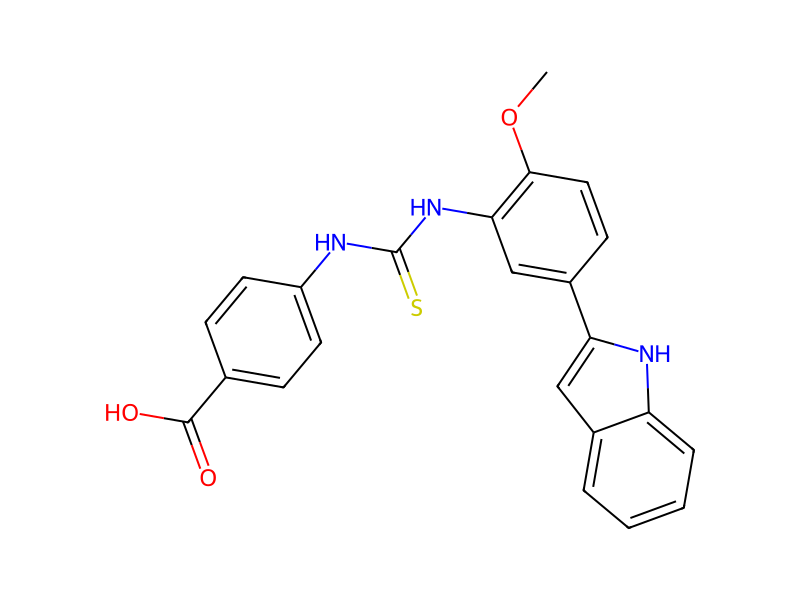
4-Isothiocyanatobenzoic acid → 4-{3-[5-(1H-Indol-2-yl)-2-methoxy-phenyl]-thioureido}-benzoic acid
반응식
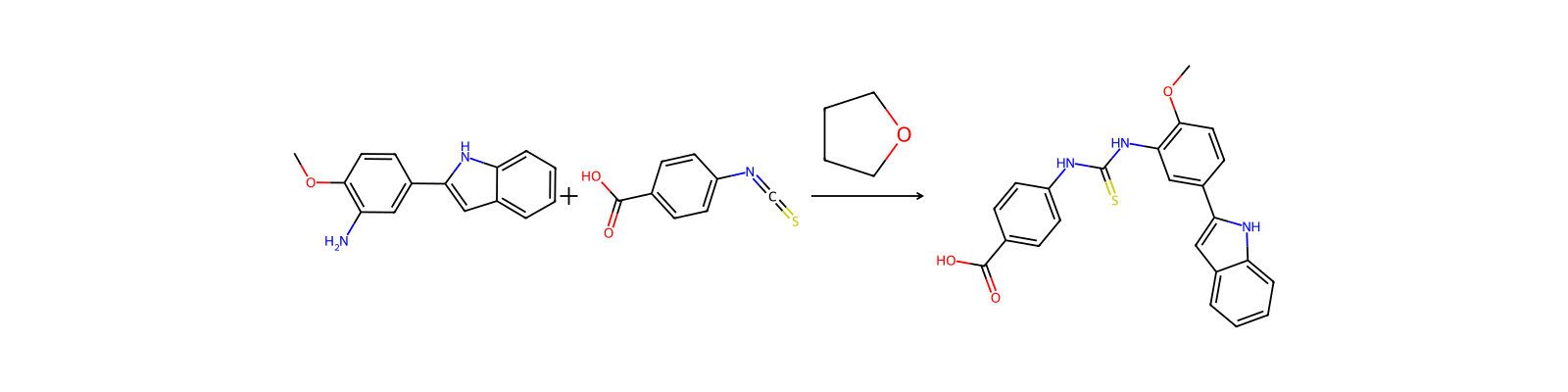
[NH:1]1[C:9]2[C:4](=[CH:5][CH:6]=[CH:7][CH:8]=2)[CH:3]=[C:2]1[C:10]1[CH:11]=[CH:12][C:13]([O:17][CH3:18])=[C:14]([NH2:16])[CH:15]=1.[C:19]([C:22]1[CH:27]=[CH:26][C:25]([N:28]=[C:29]=[S:30])=[CH:24][CH:23]=1)([OH:21])=[O:20]>O1CCCC1>[NH:1]1[C:9]2[C:4](=[CH:5][CH:6]=[CH:7][CH:8]=2)[CH:3]=[C:2]1[C:10]1[CH:11]=[CH:12][C:13]([O:17][CH3:18])=[C:14]([NH:16][C:29](=[S:30])[NH:28][C:25]2[CH:24]=[CH:23][C:22]([C:19]([OH:21])=[O:20])=[CH:27][CH:26]=2)[CH:15]=1참가 물질
4

실험 절차
The product from Example 1, Step B, 5-(1H-indol-2-yl)-2-methoxy-phenylamine (0.286 g, 1.0 mmol) was mixed with 4-carboxyphenyl isothiocyanate (0.185 g, 1.03 mmol) in tetrahydrofuran (40 mL). The solvent was boiled off on the rotary evaporator (no vacuum), and ethyl acetate was added to the residue and the insoluble material was collected by filtration. The collected solid was taken up in tetrahydrofuran, concentrated to dryness, and triturated again with ethyl acetate to give the product as a white solid (0.180 g), mp 201-203° C.