반응식

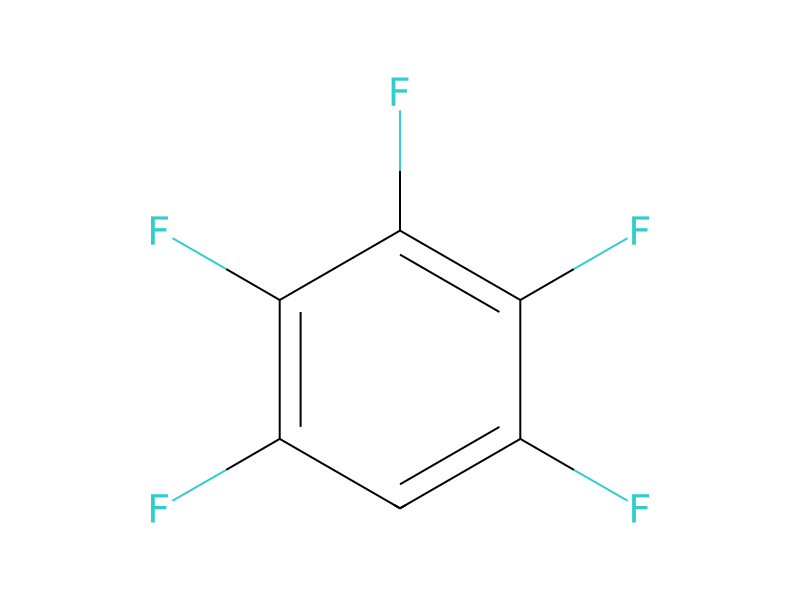
[F:1][C:2]1[C:7]([Li])=[C:6]([F:9])[C:5]([F:10])=[C:4]([F:11])[C:3]=1[F:12].FC1C(F)=C(F)C(F)=C(F)C=1.C([Li])CCC.[C:29](=[O:31])=[O:30]>>[F:1][C:2]1[C:7]([C:29]([OH:31])=[O:30])=[C:6]([F:9])[C:5]([F:10])=[C:4]([F:11])[C:3]=1[F:12]참가 물질




실험 절차
Up to now, several synthetic reactions for pentafluorophenyl alkali metal salt are known. For example, a method of producing pentafluorophenyllithium through bromine-metal exchange reaction using relatively expensive bromopentafluorobenzene as a starting raw material for a source of pentafluorophenyl group and butyllithium is already known. For example, in Synthesis of Fluoroorganic Compounds, p. 190, Springer-Verlag (1985), pentafluorophenyllithium is prepared in diethylether-hexane at -70° C. and is reacted with sulfur dioxide to give lithium pentafluorophenylsulfenate with 94% yield. Also, a method of producing pentafluorophenyllithium through hydrogen-metal exchange reaction using pentafluorobenzene as a starting raw material for a source of pentafluorophenyl group and butyllithium is already known. For example, in J. Org. Chem., 29, 2385 (1964), pentafluorophenyllithium prepared from pentafluorobenzene and butyllithium is reacted with carbon dioxide gas to give pentafluorobenzoic acid wherein the reaction yield is unknown, but the purification yield, depending on reaction solvent system, is 68% in diethylether-hexane system, 80.9% in diethylether type and 82% in diethylether-tetrahydrofuran system respectively.
출처 및 근거
- ORD 기록
- ord-a56c8a41c2cc475db1f4ef5cf9f7b791
- 출처 데이터셋
- uspto-grants-1995_02
- 특허 번호
- US05387727
연결된 노트
불러오는 중…