1,2-Diethenylbenzene → Norborna-diene
HRID 322600
반응식
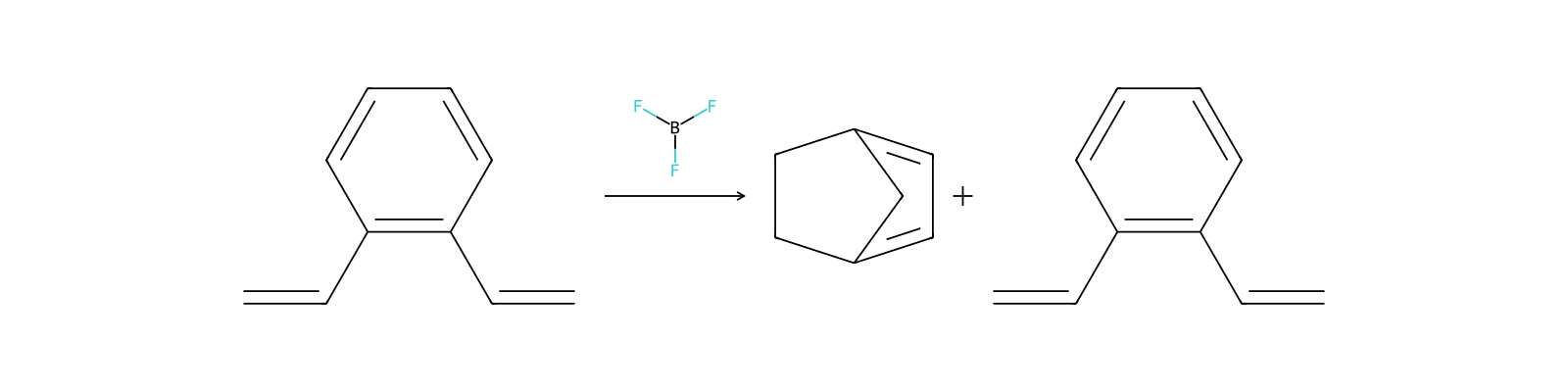
[CH:1]([C:3]1[CH:8]=[CH:7][CH:6]=[CH:5][C:4]=1[CH:9]=[CH2:10])=[CH2:2]>B(F)(F)F>[C:4]12[CH2:9][C:7]([CH2:8][CH2:3]1)=[CH:6][CH:5]=2.[CH:1]([C:3]1[CH:8]=[CH:7][CH:6]=[CH:5][C:4]=1[CH:9]=[CH2:10])=[CH2:2]참가 물질
4

실험 절차
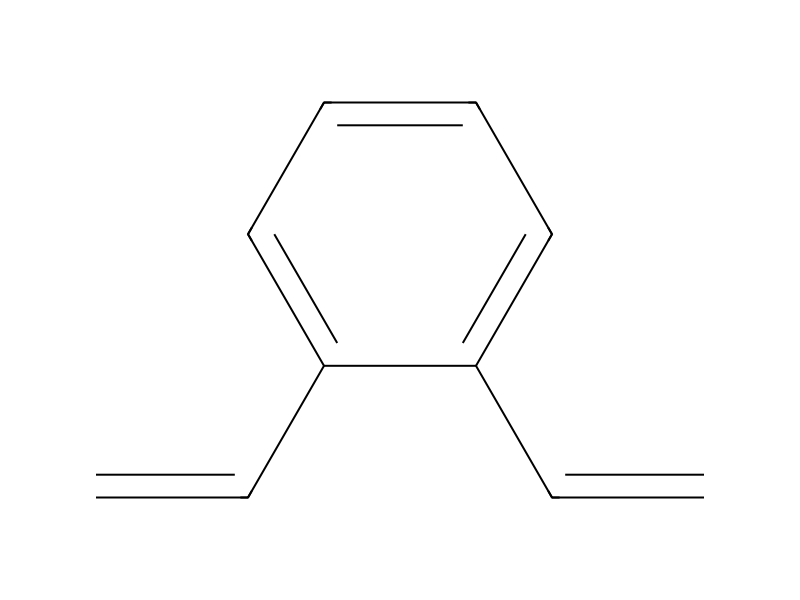
Norbornadiene and divinylbenzene were thermoset in the presence of conjugated soybean oil to give glossy, rubbery, brown solids (Table 7). These thermosets had excellent properties, i.e., no oily phases in the thermoset, little blooming of oils, and no significant decomposition over time in air when the boron catalyst ratio was at least 2% by weight. The higher the ratio of divinylbenzene, the harder the thermoset was (Table 7, entry 5). The lower concentrations of divinylbenzene gave a more rubbery material (entry 3). These thermosets have a tendency to continue the curing process at room temperature over time. Most samples studied with higher concentrations of divinylbenzene became more rigid over a period of months. The use of 1% boron trifluoride catalyst still gave materials with very desirable properties. Conjugated soybean oil with 1% catalyst and 10% each of norbornadiene and divinylbenzene by weight gave a solid that was brown in color, glossy, and slightly rubbery in nature (entry 16). The thermosets with divinylbenzene used alone (Table 8) gave hard, glossy, brown solids when the divinylbenzene content was 15% or higher (entries 3-6).