Nitromethane → 2-n-Hexyl-3-nitromethylcyclopentanone
반응식

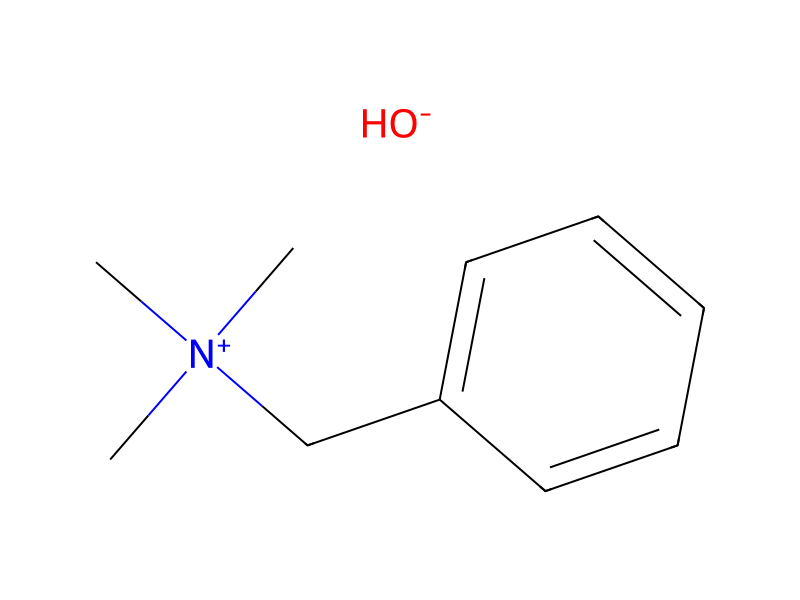
[CH2:1]([C:7]1[C:8](=[O:12])[CH2:9][CH2:10][CH:11]=1)[CH2:2][CH2:3][CH2:4][CH2:5][CH3:6].[N+:13]([CH3:16])([O-:15])=[O:14].[OH-].C([N+](C)(C)C)C1C=CC=CC=1>O1CCOCC1>[CH2:1]([CH:7]1[CH:11]([CH2:16][N+:13]([O-:15])=[O:14])[CH2:10][CH2:9][C:8]1=[O:12])[CH2:2][CH2:3][CH2:4][CH2:5][CH3:6]참가 물질
5




실험 절차
In a 2-L flask fitted with a reflux condenser, is placed 332 g of 2-n-hexyl-2-cyclopentenone, 183 g of nitromethane, 30 ml of 40% methanolic solution of benzyltrimethylammonium hydroxide (Triton B) and 200 ml of dry dioxane. The reaction mixture is refluxed for 23 hours. The solvent is distilled off under a reduced pressure and the residue is dissolved in 1 L of ether. The ether solution is washed successively with dilute hydrochloric acid, water and sodium bicarbonate solution and dried over anhydrous sodium sulphate. The solvent is removed at atmospheric pressure and the residue is distilled through a short Vigreux column. After a lower boiling fraction (35 g, 65° C/0.2 mm) consisting of 2-n-hexyl-2-cyclopentenone, the product is collected at 135° C/0.3 mm, yield 365 g (80%), nD20 1.4733.