반응식

[CH3:1][O:2][C:3]1[CH:8]=[CH:7][C:6]([NH:9][C:10]([CH:12]2[CH2:14][CH2:13]2)=[O:11])=[CH:5][N:4]=1.[C:15]([OH:28])(=[O:27])[CH2:16][CH2:17][CH2:18][CH2:19][CH2:20][CH2:21][CH2:22][CH2:23][CH2:24][CH2:25][CH3:26]>CC(C)=O>[C:15]([OH:28])(=[O:27])[CH2:16][CH2:17][CH2:18][CH2:19][CH2:20][CH2:21][CH2:22][CH2:23][CH2:24][CH2:25][CH3:26].[CH3:1][O:2][C:3]1[CH:8]=[CH:7][C:6]([NH:9][C:10]([CH:12]2[CH2:14][CH2:13]2)=[O:11])=[CH:5][N:4]=1참가 물질
4
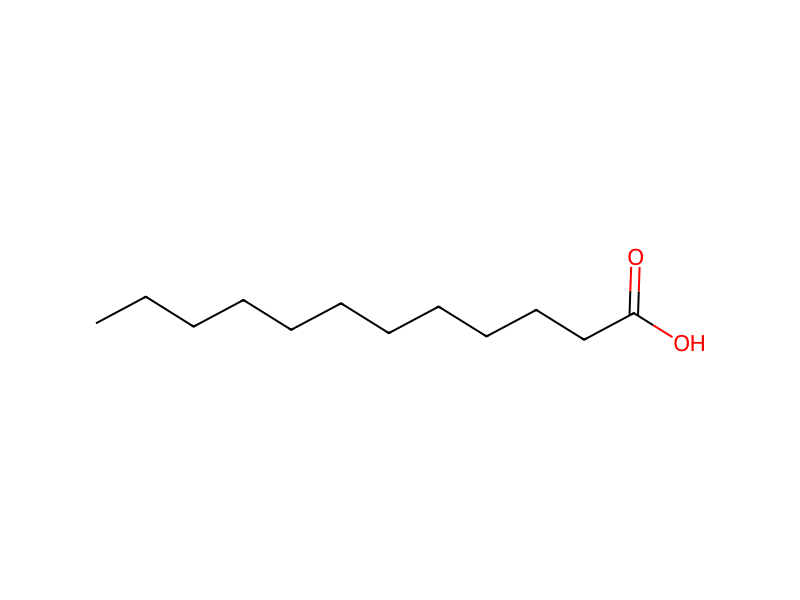



실험 절차
Three grams (0.016 mole) of the compound of Example 1 was dissolved in 100 ml of acetone in a 300 ml, one-neck, round-bottom flask by swirling. 3.2 g (0.016 mole) dodecanoic acid was added which went into solution. The resulting solution was evaporated on a rotary evaporator, yielding 6.2 g, of a white solid having a melting point of 92°-96° C., which was identified by nuclear magnetic resonance spectroscopy as the title compound. This compound will be known as Compound 7.
후처리
- customThe resulting solution was evaporated on a rotary evaporator
- customyielding 6.2 g
출처 및 근거
- ORD 기록
- ord-5ac46be8efc64a7882dd6352e59966b7
- 출처 데이터셋
- uspto-grants-1990_01
- 특허 번호
- US04895858
연결된 노트
불러오는 중…